Difficulty reaching orgasm — often called delayed ejaculation — can be just as frustrating as ejaculating too quickly, and far less talked about. When climax takes an unusually long time, requires intense effort, or doesn’t happen at all despite desire and stimulation, it can strain confidence and intimacy. The encouraging news is that delayed orgasm almost always has an identifiable cause, and once it’s found, effective treatment usually follows.
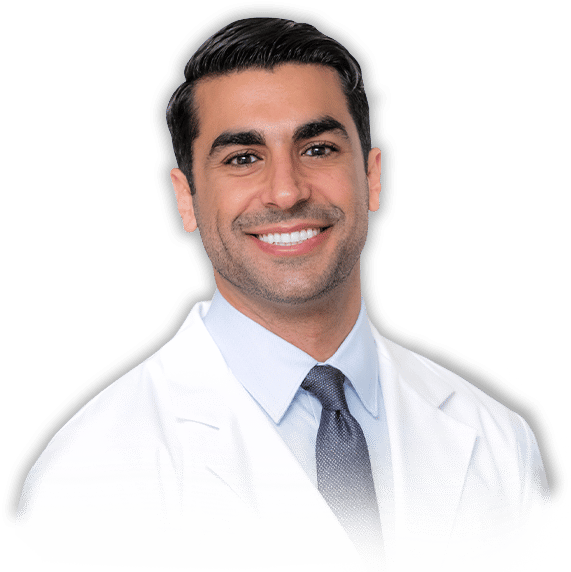
Dr. Justin Houman is a board-certified urologist, Fellow of the American College of Surgeons, and Assistant Professor of Urology at Cedars-Sinai Medical Center, fellowship-trained in male reproductive and sexual medicine at UCLA. That dual training in both sexual function and fertility is especially valuable here, since difficulty with orgasm and ejaculation can affect a man’s ability to conceive as well as his satisfaction. A member of the Sexual Medicine Society of North America, he has been featured in national media including Men’s Health for his work in men’s sexual health.
I was sent to Dr. Houman from another Urologist that was pretty confused about my situation. Dr. Houman’s team scheduled me quickly, and once we met, Dr. Houman took action immediately. He has a great team that is very nice. He is very personable, listens, jumps right into the trenches, explains everything, and is very responsive. I love working with Dr. Houman, definitely the best Doctor I’ve had!
What Is Delayed Orgasm?
Delayed orgasm, also known as delayed ejaculation, is a condition in which reaching sexual climax takes an unusually long time or doesn’t happen at all, despite adequate desire and stimulation. It’s essentially the opposite of premature ejaculation. There’s no strict time limit that defines it; rather, it’s diagnosed when the delay causes distress or disrupts sexual activity. It can be lifelong (present since sexual maturity) or acquired (developing after normal function), and generalized (occurring in all situations) or situational (only in certain circumstances) — distinctions that help guide treatment.
Delayed Orgasm and Fertility
Because orgasm and ejaculation are closely linked, difficulty reaching climax can also affect a man’s ability to conceive. When delayed or absent ejaculation stands in the way of starting a family, Dr. Houman’s reproductive training allows him to address both concerns at once — treating the dysfunction where possible and, when needed, drawing on fertility options such as sperm retrieval to help couples move forward. It’s an advantage few sexual-health practices can offer.


What Causes Difficulty Reaching Orgasm?
Delayed orgasm can stem from physical causes, psychological ones, or a combination:
Medications
Antidepressants, especially SSRIs, are among the most common causes, along with certain other prescriptions.
Nerve-Related Conditions
Diabetes, nerve damage, or pelvic and prostate surgery can interfere with the ejaculatory reflex.
Hormonal Factors
Low testosterone, thyroid problems, or other hormone imbalances can contribute.
Psychological Factors
Anxiety, depression, stress, or relationship concerns often play a role.
Lifestyle Factors
Excess alcohol or substance use, and natural changes with age, can also be involved.
Treatment Options for Delayed Orgasm
Treatment is directed at the underlying cause, which is why an accurate diagnosis matters so much:
- Adjusting Medications: When a medication such as an SSRI is the cause, changing or modifying it — in coordination with your prescriber — often resolves the problem.
- Treating Hormonal Causes: Correcting low testosterone or a thyroid issue can restore normal function.
- Counseling and Sex Therapy: Highly effective when anxiety, depression, or relationship factors contribute.
- Behavioral Approaches: Adjusting stimulation patterns and techniques can help in certain cases.
- Addressing Underlying Conditions: Managing contributors such as diabetes supports better function.
It’s worth noting that no medication is FDA-approved specifically for delayed ejaculation; treatment focuses on the underlying cause, and any medications used for the condition itself are prescribed off-label. Dr. Houman is transparent about this as he builds your plan.
What to Expect: Evaluation
Pinpointing the cause is the heart of effective treatment. Dr. Houman begins with a detailed medical and sexual history, a careful review of your current medications, and an honest conversation about psychological and relationship factors. When appropriate, hormone testing and an assessment of nerve-related or other medical contributors round out the picture. This thorough approach ensures the plan addresses the actual cause rather than guessing at it.

Frequently Asked Questions About Delayed Orgasm
-
Also called delayed ejaculation, it’s when reaching climax takes an unusually long time, requires significant effort, or doesn’t happen at all despite adequate desire and stimulation.
-
It’s essentially the opposite — premature ejaculation is climaxing too quickly, while delayed orgasm is difficulty reaching climax at all.
-
Often, yes — antidepressants, especially SSRIs, are one of the most common causes, and adjusting them with your prescriber can make a real difference.
-
No medication is FDA-approved specifically for delayed ejaculation; treatment targets the underlying cause, and any medications used for it are prescribed off-label.
-
It can — difficulty ejaculating can interfere with conception, which is why Dr. Houman’s combined sexual-health and fertility expertise is especially helpful.
-
Yes — once the cause is identified, whether a medication, hormone, or psychological factor, most men see meaningful improvement.
Why Choose Dr. Houman for Delayed Orgasm Treatment in Los Angeles
- Cause-Focused Diagnosis: Careful evaluation to find the real reason behind the difficulty.
- Sexual Health and Fertility Expertise: Both concerns addressed by a single specialist.
- Discreet, Judgment-Free Care: A comfortable setting for an under-discussed issue.
- Coordinated Medication Review: Thoughtful adjustment of contributing prescriptions.
Meet Dr. Houman
Expert in Men’s Health with Tower Urology and Cedars Sinai
Dr. Justin Houman, MD, FACS is a board-certified urologist and fellowship-trained microsurgeon at Tower Urology, Cedars-Sinai Medical Center in Los Angeles. His subspecialty training in male reproductive medicine and microsurgery is held by fewer than 2% of practicing urologists in the United States.
His clinical focus is narrow by design. Varicoceles, chronic testicular pain, male infertility, vasectomy, testosterone optimization, erectile dysfunction, penile implant surgery, and Peyronie’s disease are not add-on services here. They are the practice. Patients travel from across the country and internationally for procedures, particularly microsurgical varicocelectomy, spermatic cord denervation, and inflatable penile implant surgery, that require a level of subspecialty training and surgical volume most urology practices do not have.
Delayed Orgasm Treatment in Los Angeles
Difficulty reaching orgasm is more common than most men think, and rarely something you simply have to live with. Dr. Houman offers discreet, thorough evaluation and personalized treatment for men across Los Angeles and Southern California, addressing both satisfaction and, when it matters, fertility. Contact the Los Angeles office to schedule a private consultation and find out what’s behind it.