

What Is a Varicocele?
A varicocele is an enlargement of the veins within the scrotum, similar to varicose veins in the legs. These dilated veins cause blood to pool around the testicles, raising the local temperature and directly damaging sperm quality, quantity, and DNA integrity. Varicoceles develop most often on the left side and are frequently seen in men presenting with infertility.
Symptoms to Watch For
Many men have no symptoms at all and discover a varicocele only after struggling to conceive. Some men do experience:
- A dull ache or heaviness in one or both testicles, particularly after standing or exercise
- Visible or palpable enlarged veins under the scrotal skin (“bag of worms”)
- One testicle appearing smaller than the other
- Signs of low testosterone: fatigue, low sex drive, brain fog
How Is It Diagnosed?
Diagnosis starts with a physical exam by a urologist, performed while standing. A scrotal Doppler ultrasound may be added when findings are inconclusive. A semen analysis should always accompany the workup if fertility is a concern.
What the Workup Looks Like
1. Physical Exam: The primary tool. A trained urologist can identify a varicocele by feel; ultrasound may be added if unclear.
2. Semen Analysis: Measures sperm count, motility, and morphology
How a Varicocele Affects Fertility and Testosterone
The elevated scrotal temperature caused by a varicocele damages the Sertoli cells and Leydig cells in the testicle, responsible for both sperm production and testosterone synthesis. This is why varicoceles can affect two things simultaneously:
- Sperm quality: reduced count, poor motility, abnormal morphology, and increased DNA fragmentation
- Testosterone levels: the same heat disrupts Leydig cell function, suppressing testosterone production Men with varicoceles and low testosterone who still want to conceive may find that varicocele repair alone can restore both testosterone and fertility, avoiding the need for hormone treatment entirely.
Treatment: Microsurgical Varicocelectomy
The gold standard treatment is microsurgical varicocelectomy, a minimally invasive outpatient procedure performed under a surgical microscope. A small incision is made near the groin, and the dilated veins are tied off while preserving the testicular artery and lymphatic vessels. Most patients go home the same day and return to desk work within a few days.
| Outcome | Result |
|---|---|
| Sperm parameter improvement | Upwards of 80% of men |
| Testosterone level improvement | Seen in majority of patient |
| Timeframe for improvement | 3–6 months post-surger |
| Return to normal activity | Within days |
Questions to Ask Your Doctor
Not all urologists subspecialize in male reproductive medicine. Use these questions to assess whether you are seeing the right specialist:
Do I have a varicocele, and what grade is it?
Varicoceles are graded 1–3 based on size. Grade 2 and 3 are more likely to impact fertility and testosterone.
Is my varicocele likely affecting my fertility or testosterone?
Your semen analysis and testosterone levels, combined with the varicocele grade, help answer this.
What type of surgery do you perform?
Microsurgical varicocelectomy under an operating microscope is the gold standard. Ask specifically about their technique and annual volume.
Should I get a semen analysis before and after treatment?
Yes, always. This is how you measure success and track improvement over the 3–6 month recovery window.
Could this improve my testosterone without TRT?
In men with both a varicocele and low testosterone who still want to conceive, repair may raise testosterone and avoid TRT, which suppresses sperm production.
What is your recurrence rate?
Microsurgical varicocelectomy has the lowest recurrence rate of any treatment option. Push for specific numbers.
Ready to take the next step?
If you think you may have a varicocele, or you’ve been trying to conceive without success, the most important thing you can do is get evaluated by a subspecialist.
Call: (310) 854-9898 Online: Schedule an Appointment
An expert in his field
Meet Dr. Houman
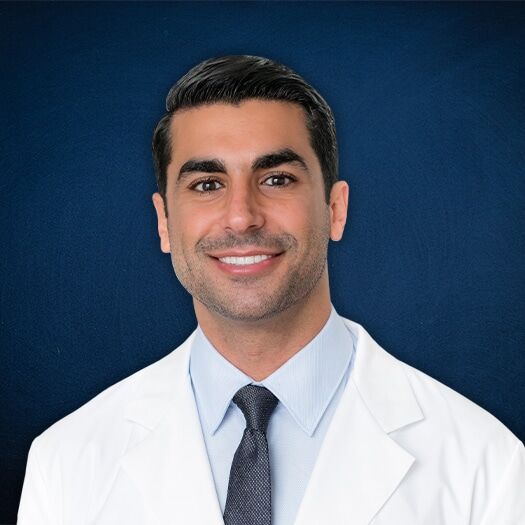
Dr. Justin Houman is a board-certified, fellowship-trained Urologist and Men’s Health specialist whose mission is to enhance men’s quality of life by improving their sexual and reproductive health. Dr. Houman’s focus is on making a difference in people’s lives through state-of-the-art, compassionate, and personally tailored care.