

Varicocele Treatment in Los Angeles
A varicocele is an enlargement of the veins inside the scrotum, the most common correctable cause of male infertility, present in 15% of all men and up to 40% of men evaluated for fertility problems. Varicoceles also suppress testosterone production and cause chronic testicular pain. When treatment is indicated, microsurgical varicocelectomy is the gold standard, recommended by both the American Urological Association (AUA) and the American Society for Reproductive Medicine (ASRM).
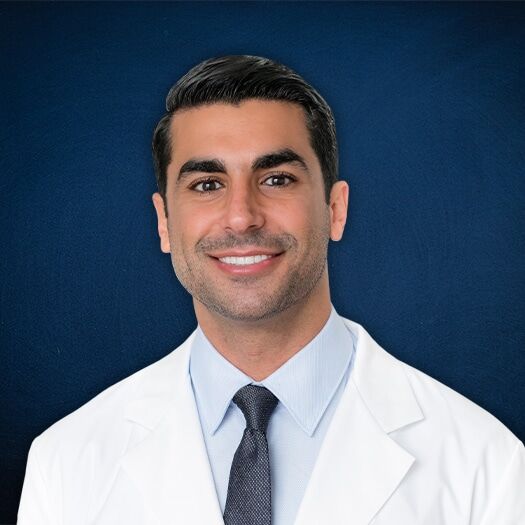
Dr. Justin Houman is a fellowship-trained microsurgical urologist at Cedars-Sinai Medical Center in Los Angeles, and one of the few surgeons in the country who performs microsurgical varicocelectomy as a core subspecialty, not a side service. Patients travel from across the U.S. and internationally for his care.
Schedule a Consultation → 310-854-9898
Why Subspecialty Training Changes Your Outcome
Not all urologists who perform varicocele repair are equally trained. Most general urologists learn varicocelectomy during residency alongside dozens of other procedures. A fellowship-trained microsurgeon trains for an additional one to two years dedicated exclusively to male reproductive microsurgery.
Dr. Justin Houman is one of the nation’s foremost experts in microsurgical varicocelectomy, a highly effective procedure for treating male infertility and testicular pain. Dr. Houman completed his fellowship training in Male Reproductive Medicine and Microsurgery at UCLA Medical Center, one of the nation’s most selective programs, before joining Cedars-Sinai as an Assistant Professor of Urology. Fewer than 2% of practicing urologists in the United States hold this level of subspecialty training.
This matters because microsurgical varicocelectomy requires the surgeon to identify and preserve the testicular artery (often less than 0.5mm in diameter) under high-powered magnification. Injury to this artery causes testicular atrophy. The skill to avoid it comes from repetition at volume, not occasional practice.
Board-Certified Urologist & Male Fertility Specialist at Cedars-Sinai
A Board-Certified Urologist and Fellowship-Trained Male Infertility and Microsurgery Specialist at Cedars-Sinai Medical Center, he also serves as an Assistant Professor of Urology, training the next generation of reproductive urologists. Fewer than 2% of urologists in the United States hold this level of fellowship training, making Dr. Houman’s expertise exceptionally rare. Patients from across the U.S. and internationally travel to his Los Angeles practice for advanced fertility care.
Dr. Houman is nationally recognized for his state-of-the-art microsurgical techniques, which deliver superior outcomes compared to older or less precise methods. His approach has been highlighted in medical news and industry publications for its ability to improve sperm quality, relieve testicular pain, and restore fertility with minimal downtime.
Center of Excellence for Varicocele Surgery in Los Angeles
✓ 1,000+ microsurgical varicocelectomies performed
✓ >90% success rate in improving sperm parameters
✓ <1% recurrence rate (vs. 10-20% with embolization)
✓ Fellowship-trained in male reproductive microsurgery – fewer than 2% of U.S. urologists
✓ High-definition operating microscope for every case
✓ Outpatient procedure – most patients return to desk work within 48–72 hours
✓ Cedars-Sinai Medical Center, Los Angeles
What Is a Varicocele? Symptoms, Causes & When to Treat
Many varicoceles cause no symptoms at all and are discovered only during a fertility evaluation or routine examination. When symptoms are present, they typically include one or more of the following:
- Dull ache or heaviness in one testicle (usually the left), worsening after physical activity or prolonged standing
- A “bag of worms” sensation – a visible or palpable mass of enlarged veins in the scrotum
- Testicular atrophy – shrinkage of the affected testicle, particularly in adolescents
- Abnormal semen analysis: low sperm count, poor motility, poor morphology, or high DNA fragmentation
- Low testosterone (hypogonadism) – often the only symptom in some men
- Difficulty conceiving with a partner despite regular unprotected intercourse
How Is a Varicocele Diagnosed?
Diagnosis is made through physical examination, typically with the patient standing and performing the Valsalva maneuver (bearing down) to engorge the veins. A scrotal Doppler ultrasound confirms the diagnosis and measures vein diameter (greater than 2.5–3mm is generally considered abnormal) and documents retrograde blood flow.
Dr. Houman performs a comprehensive evaluation that includes physical exam, ultrasound review, semen analysis, and a full hormone panel (testosterone, LH, FSH, estradiol) at your consultation.
When Is Varicocele Treatment Recommended?
Not every varicocele requires surgery. The AUA recommends varicocele repair when all of the following are present:
- The varicocele is clinically palpable on physical exam
- There is documented infertility or abnormal semen parameters
- Female fertility is normal, or any female factor is potentially treatable
Additional indications where Dr. Houman may recommend repair even without an active fertility goal:
- Clinically significant low testosterone (hypogonadism) associated with a varicocele
- Chronic testicular pain that has not responded to conservative treatment
- Testicular atrophy in adolescents or young men with a palpable varicocele
- High sperm DNA fragmentation causing IVF failures
Microsurgical Varicocelectomy: The Gold Standard Procedure
Microsurgical varicocelectomy is performed through a small incision, typically less than 1 inch, in the groin or lower groin (subinguinal approach). Using a high-powered operating microscope at 6-25x magnification, Dr. Houman identifies and ligates the abnormally dilated veins while meticulously preserving:
- The testicular artery – which supplies blood to the testicle
- The lymphatic vessels – whose injury causes hydrocele (fluid accumulation)
- The vas deferens – the tube that carries sperm
The procedure is performed as outpatient surgery under general or spinal anesthesia and typically takes 45–90 minutes per side. Most patients go home the same day.
Why This Approach Outperforms the Alternatives
| Approach | Recurrence Rate | Hydrocele Risk | Pregnancy Rate | Notes |
|---|---|---|---|---|
| Microsurgical varicocelectomy | <1-2% | <1% | 40-60% | Gold standard per AUA/ASRM |
| Laparoscopic repair | 3–5% | 5–12% | Lower | General anesthesia, abdominal access |
| Embolization (non-surgical) | 10–20% | Minimal | Lower | No incision; higher recurrence |
| Open retroperitoneal | 10–15% | 7–10% | Lower | Older technique |
The recurrence and hydrocele rates for microsurgical repair are significantly lower than alternatives because of the precision afforded by the operating microscope. Dr. Houman’s personal recurrence rate is below 1%.
Dr. Houman’s outcomes speak for themselves:
-
>95% success rate in improving sperm parameters and fertility
-
<1% recurrence rate, compared with 10–20% recurrence in non-surgical embolization techniques
-
Significant improvement in testicular pain for men who undergo surgery primarily for discomfort
-
By using advanced microsurgical techniques, Dr. Houman is able to achieve fertility outcomes that set a national benchmark.
Dr. Houman’s Microsurgical Technique
Microsurgical varicocelectomy involves making a very small incision, often less than one inch, in the groin or scrotum. Using a high-powered operating microscope, Dr. Houman carefully identifies and ties off the problematic veins while preserving surrounding arteries, lymphatics, and reproductive structures. This precision dramatically reduces complications and maximizes success rates.
The procedure is typically performed as outpatient surgery, allowing patients to return home the same day. Most men resume normal daily activities in just 2–3 days, with full activity and exercise usually possible within 2–3 weeks. Compared to older open surgical methods or embolization, microsurgical varicocelectomy offers faster recovery, lower recurrence, and superior fertility results.
Schedule a Consultation → 310-854-9898
Varicocele and Male Infertility: What the Evidence Shows
Varicoceles are the most commonly identified correctable cause of male infertility. They impair fertility through several mechanisms:
- Heat stress: The dilated veins raise scrotal temperature, which disrupts the temperature-sensitive process of sperm production (spermatogenesis)
- Oxidative damage: Increased venous pressure generates reactive oxygen species that damage sperm DNA
- Impaired testosterone: Leydig cell dysfunction reduces testosterone, further compromising sperm production
What to Expect After Repair
Sperm take approximately 72–90 days to mature (one full spermatogenic cycle). Improvement in semen parameters is typically assessed at the 3-month and 6-month post-operative visits.
Published evidence shows microsurgical varicocelectomy:
- Improves sperm concentration in approximately 70–80% of men
- Achieves natural pregnancy rates of 40–60% within 12 months in couples where female fertility is normal
- Is 2.5 times more likely to result in spontaneous pregnancy than observation alone
Even in men using assisted reproductive technology (IVF/ICSI), varicocele repair first can improve sperm quality enough to eliminate the need for IVF — or significantly improve IVF outcomes by increasing the number and quality of available sperm.
Varicocele and Azoospermia
In men with non-obstructive azoospermia (no sperm in the ejaculate) who also have a palpable varicocele, repair has been shown to return sperm to the ejaculate in approximately 30–50% of cases — potentially allowing natural conception or IVF with ejaculated sperm, rather than surgical sperm retrieval. Dr. Houman specializes in this complex intersection and works closely with IVF centers when combined treatment is warranted.
Can a Varicocele Cause Testicular Pain?
Yes. Varicocele-related testicular discomfort is a recognized and treatable condition. The pain is typically described as:
- A dull, heavy aching in the affected testicle
- Worsening with standing, exercise, or the end of the day
- Relieving when lying down (as venous drainage improves)
Microsurgical varicocelectomy provides significant or complete pain relief in approximately 80–90% of men who undergo surgery specifically for pain — one of the highest success rates of any procedure for chronic scrotal pain.
For men with varicocele-related pain and infertility, treating the varicocele addresses both problems simultaneously.
Related: If testicular pain persists after varicocele repair, or has no identifiable cause, Dr. Houman also performs Robotic Microsurgical Spermatic Cord Denervation – a procedure offered by very few surgeons in the United States.
Does Varicocele Treatment Improve Testosterone?
Yes, and this is one of the most underrecognized benefits of varicocele repair.
Varicoceles impair the function of Leydig cells in the testicle, which are responsible for producing testosterone. Multiple peer-reviewed studies have demonstrated measurable increases in serum testosterone following microsurgical varicocelectomy, particularly in men with clinically low testosterone (hypogonadism).
This is clinically important for two reasons:
- Testosterone therapy suppresses sperm production. Men who want to preserve fertility should not start testosterone replacement until varicocele repair has been evaluated as a potential natural solution.
- Some men avoid TRT entirely. In men whose hypogonadism is primarily driven by a varicocele, repair may restore testosterone to normal levels without lifelong medication.
Dr. Houman evaluates testosterone as part of every varicocele consultation. If you have both a varicocele and low testosterone, surgery may be the most effective — and most natural — first step.
→ Learn more: Low Testosterone Treatments
Microsurgical Varicocelectomy vs. Embolization: Which Is Right for You?
Varicocele embolization is a non-surgical, radiologically guided procedure in which a catheter is passed through a vein (typically from the groin or neck) to place coils or foam that block the varicocele. It requires no incision and is performed under local anesthesia with sedation.
When embolization may be appropriate:
- Patient preference for avoiding surgery
- Prior inguinal surgery making microsurgical approach technically difficult
- Bilateral varicoceles in a patient who wants the shortest recovery
Why microsurgical repair is usually preferred:
- Recurrence rate: 10–20% with embolization vs. <1–2% with microsurgery
- Cannot treat external spermatic or gubernacular veins (non-internal spermatic veins) — a common source of recurrence
- Fertility outcomes and sperm improvement rates are superior with microsurgery
- AUA and ASRM guidelines favor microsurgical repair as the gold standard
Dr. Houman offers a frank, individualized discussion of both options at your consultation. The right choice depends on your anatomy, goals, and history.
→ Full comparison: Microsurgical Varicocelectomy vs. Embolization
Complex and Recurrent Varicocele Cases
Many urologists refer their most difficult cases to Dr. Houman. He specializes in:
- Recurrent varicocele after prior surgery or embolization
- Bilateral varicoceles requiring simultaneous repair
- Varicocele with azoospermia — coordinated with sperm retrieval
- Adolescent varicocele with progressive testicular atrophy
- Varicocele with high sperm DNA fragmentation causing IVF failure
- Post-varicocelectomy pain — managed with spermatic cord denervation if needed
If you’ve had a prior procedure that failed, or another surgeon declined to operate due to complexity, this practice was built for exactly that situation.
Who Is a Candidate for Microsurgical Varicocelectomy?
You may be a candidate if you have:
- A palpable varicocele on physical examination
- Abnormal semen analysis (low count, motility, or morphology)
- Difficulty conceiving with a partner who has been evaluated
- Chronic testicular pain or heaviness not explained by another cause
- Low testosterone with a confirmed varicocele
- High sperm DNA fragmentation
- Testicular atrophy (adolescents and young men)
Men without symptoms, with normal semen analyses, and who are not trying to conceive are generally not candidates for immediate surgery and benefit from periodic monitoring instead.
Am I a Candidate? Schedule a Consultation → 310-854-9898
What to Expect: The Procedure and Recovery
Before Surgery
- Comprehensive consultation including physical exam, review of semen analysis, and hormone panel
- Pre-operative instructions provided (fasting, medications)
- Procedure scheduled at a Cedars-Sinai-affiliated surgical center
The Day of Surgery
- Outpatient procedure – you go home the same day
- General or spinal anesthesia
- Operating time: 45 minutes for unilateral; 60-90 minutes for bilateral
- Small incision, typically less than 1 inch, in the groin or lower groin
- Closed with absorbable sutures – no staples or stitch removal required
Recovery Timeline
| Timeframe | What to Expect |
|---|---|
| Day 1–2 | Mild soreness; ice packs; rest at home |
| Days 2–3 | Return to desk work and light activity |
| Week 1–2 | Avoid lifting, strenuous activity, sexual activity |
| Week 2–3 | Return to exercise and full activity |
| Month 3 | First post-operative semen analysis |
| Month 6 | Second semen analysis; pregnancy attempt typically advised |
Most men describe recovery as significantly easier than expected. Pain is mild and typically managed with over-the-counter anti-inflammatories.
→ Full guide: Complete Recovery Guide After Microsurgical Varicocelectomy
Dr. Justin Houman: Credentials & Why It Matters
Justin Houman MD, FACS
- Board-Certified Urologist, American Board of Urology
- Fellowship Training: Male Reproductive Medicine & Surgery, UCLA Medical Center (one of the nation’s most selective programs)
- Academic Appointment: Assistant Professor of Urology, Cedars-Sinai Medical Center
- Hospital Affiliation: Tower Urology, Cedars-Sinai Medical Center, Los Angeles
- Subspecialty: Male fertility, microsurgery, varicocele, testicular pain, vasectomy, testosterone optimization
- Languages: English, Spanish, Farsi
- Published Research: Peer-reviewed publications
- Professional Memberships: American Urological Association, Sexual Medicine Society of North America, International Society of Sexual Medicine, Los Angeles Urologic Society
Fewer than 2% of practicing urologists in the United States hold fellowship training in male reproductive medicine and microsurgery. Dr. Houman’s practice is narrow by design — varicocele, testicular pain, male infertility, vasectomy, and hormone management are not add-on services. They are the practice.
Patients travel from across the country and internationally — particularly for microsurgical varicocelectomy, robotic spermatic cord denervation, and complex fertility cases that require a level of subspecialty training most urology practices do not have.
Serving Los Angeles and Beyond
Dr. Houman’s practice is located at Cedars-Sinai Medical Center in Los Angeles, conveniently accessible from throughout the greater Los Angeles area, including Beverly Hills, West Hollywood, Brentwood, Santa Monica, Culver City, Malibu, and the San Fernando Valley (Encino, Pasadena, Glendale, Burbank, Calabasas, Thousand Oaks).
Men also travel from Orange County, San Diego, the Bay Area, and other states for subspecialty procedures not commonly available locally. Out-of-area consultations can often be initiated via telemedicine with in-person follow-up for surgery.
→ Related services nearby:
- Testicular Pain Doctor Los Angeles
- Male Fertility Specialist Los Angeles
- No-Scalpel Vasectomy Los Angeles
Schedule a Consultation Today
If you have been diagnosed with a varicocele, have questions about your semen analysis, or are experiencing testicular pain or low testosterone, the next step is a consultation with Dr. Houman.
At your visit, you will receive:
- A thorough physical examination
- Review of any prior semen analyses, ultrasounds, and labs
- A clear explanation of whether treatment is indicated — and why
- A frank discussion of all options, including observation, embolization, and microsurgery
Call: (310) 854-9898 Online: Schedule an Appointment
Frequently Asked Questions About Varicocele Treatment & Microsurgical Varicocelectomy
Q: What is a varicocele?
A varicocele is an enlargement of the veins inside the scrotum, similar to varicose veins in the legs. It affects approximately 15% of all men and is the most common correctable cause of male infertility, found in up to 40% of men evaluated for fertility problems. Varicoceles develop when the one-way valves in the spermatic veins fail, allowing blood to pool and the veins to dilate.
Q: What are the symptoms of a varicocele?
Many varicoceles cause no symptoms and are discovered only during a fertility evaluation. When symptoms occur, they typically include a dull ache or heaviness in one testicle (usually the left), worsening with prolonged standing or physical activity and improving when lying down. Other symptoms include a “bag of worms” sensation in the scrotum, testicular shrinkage, abnormal semen analysis results, and low testosterone.
Q: Does a varicocele cause infertility?
Yes, varicoceles are the most commonly identified correctable cause of male infertility. They raise scrotal temperature and generate oxidative stress that damages sperm production and DNA. Microsurgical varicocelectomy improves sperm parameters in approximately 70–80% of men and achieves natural pregnancy rates of 40–60% within one year when female fertility is normal.
Q: Can a varicocele cause low testosterone?
Yes. Varicoceles impair the testicular Leydig cells responsible for testosterone production. Multiple peer-reviewed studies have shown that microsurgical varicocelectomy can meaningfully increase testosterone levels, particularly in men with clinically low testosterone. For men who want to preserve fertility, varicocele repair should be evaluated before starting testosterone replacement therapy, which suppresses sperm production.
Q: What is the best treatment for a varicocele?
Microsurgical varicocelectomy is considered the gold standard treatment by the American Urological Association and the American Society for Reproductive Medicine. It offers the lowest recurrence rate (<1–2%), the lowest risk of complications, and the best fertility and testosterone outcomes of any treatment approach. Embolization is a non-surgical alternative with a higher recurrence rate (10–20%) that may be appropriate in selected cases.
Q: How long is recovery after varicocele surgery?
Most patients return to desk work within 48–72 hours. Physical activity and exercise are restricted for 2–3 weeks. Sperm improvement is assessed at 3 and 6 months post-operatively, as one full spermatogenic cycle takes approximately 72–90 days.
Q: What is the success rate of microsurgical varicocelectomy?
Microsurgical varicocelectomy improves sperm parameters in approximately 70–80% of men. Natural pregnancy rates of 40–60% are reported within one year in couples where female fertility is normal. Recurrence rates are below 1–2% with the microsurgical approach, compared to 10–20% with embolization.
Q: Is varicocele surgery covered by insurance?
Varicocele repair performed for a documented fertility indication or testicular pain is typically billed as a medical procedure and is covered by many insurance plans, including PPO plans. Dr. Houman’s office assists with insurance verification and pre-authorization. Coverage varies by plan.
Q: What is the difference between microsurgical varicocelectomy and varicocele embolization?
Microsurgical varicocelectomy is a surgical procedure using a high-powered microscope to ligate abnormal veins through a small groin incision, with <1–2% recurrence and superior fertility outcomes. Embolization is a non-surgical, radiologically guided procedure using coils or foam to block the veins, with a 10–20% recurrence rate. Most fertility specialists prefer microsurgery for men with infertility goals.
Q: Can a varicocele come back after surgery?
With microsurgical varicocelectomy, the recurrence rate is less than 1–2% — significantly lower than the 10–20% recurrence seen with embolization. Recurrence after microsurgery most commonly results from small collateral veins (gubernacular or external spermatic) that were not identified during the original procedure. Dr. Houman performs revisional varicocelectomy for men whose prior surgery was unsuccessful.
Q: Can a varicocele be treated without surgery?
Embolization is a non-surgical option. Some men with mild symptoms and no fertility concerns are observed without intervention. However, varicoceles do not resolve on their own, and watchful waiting is appropriate only in men with normal semen parameters and no active fertility goals. Conservative measures like supportive underwear may reduce discomfort but do not treat the underlying cause.
Male Fertility: Optimize Your Sperm Health
READ BLOG
An expert in his field
Meet Dr. Houman
Dr. Justin Houman is a board-certified, fellowship-trained Urologist and Men’s Health specialist whose mission is to enhance men’s quality of life by improving their sexual and reproductive health. Dr. Houman’s focus is on making a difference in people’s lives through state-of-the-art, compassionate, and personally tailored care.