

Jump to Section ↑
- Fellowship-Trained Expertise in Testicular Pain Management
- What Is Chronic Orchialgia?
- Why Men Seek Specialized Care for Chronic Testicular Pain
- What are my treatment options?
- What to Expect During Evaluation and Treatment
- Frequently Asked Questions About Chronic Orchialgia Treatment
- Why Choose Dr. Houman for Chronic Orchialgia Treatment
- Schedule a Consultation in Los Angeles
Chronic testicular pain – lasting more than three months and significantly impacting daily life – affects thousands of men each year, yet remains one of the most challenging conditions in urology to diagnose and treat effectively. For men who have struggled with persistent scrotal discomfort despite multiple treatments and provider visits, finding a specialist with advanced microsurgical expertise can make the difference between continued suffering and meaningful relief.
Fellowship-Trained Expertise in Testicular Pain Management
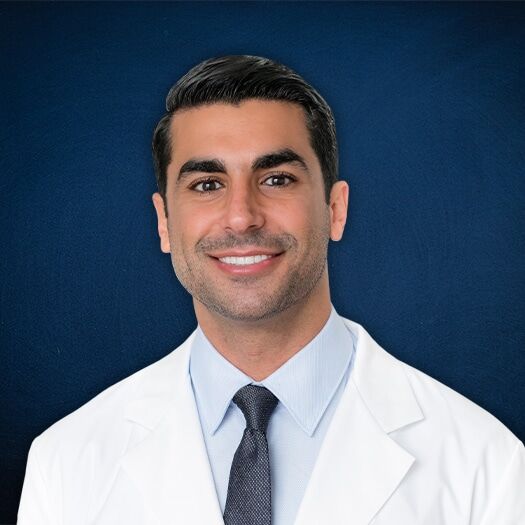
Dr. Justin Houman is a board-certified urologist and Fellow of the American College of Surgeons (FACS) who completed specialized fellowship training in Male Reproductive Medicine and Surgery at UCLA Medical Center—one of the nation’s most rigorous programs for microsurgical technique. As an Assistant Professor of Urology at Cedars-Sinai Medical Center, he combines academic excellence with hands-on clinical expertise, treating complex cases of chronic orchialgia that have not responded to conventional management.
His practice serves as a recognized Center of Excellence for microsurgical varicocelectomy and testicular pain management, with a particular focus on spermatic cord pathology, nerve-specific evaluation, and re-operative urologic microsurgery. Patients travel from throughout Los Angeles, Beverly Hills, and Southern California seeking Dr. Houman’s subspecialty expertise after exhausting treatment options elsewhere.
“Chronic orchialgia is a condition that requires patience, precision, and a systematic approach,” says Dr. Houman. “I believe in thoroughly evaluating every patient to identify the true source of their pain before recommending any surgical intervention. When surgery is appropriate, microsurgical technique offers the best chance for lasting relief while preserving testicular function.”
What Is Chronic Orchialgia?
Chronic orchialgia is defined as intermittent or constant testicular pain persisting for three months or longer that interferes with quality of life, work, relationships, or physical activity. Unlike acute conditions such as testicular torsion or infection, chronic orchialgia represents a complex pain syndrome with multiple potential contributing factors.
The condition affects approximately 2.5% of men and accounts for up to 100,000 outpatient urology visits annually in the United States. Despite its prevalence, chronic testicular pain remains underdiagnosed and often undertreated due to the complexity of identifying specific pain generators within the spermatic cord and scrotal structures.
Common causes and contributing factors include:
- Post-Vasectomy Pain Syndrome: Occurring in approximately 1–2% of men following vasectomy, this condition involves chronic scrotal discomfort related to epididymal congestion or nerve entrapment
- Prior Inguinal Surgery: Hernia repairs, particularly those involving mesh placement, can lead to chronic pain from nerve damage or entrapment
- Epididymitis: Chronic or recurrent inflammation of the epididymis, sometimes persisting after acute infection has resolved
- Varicocele: Enlarged veins within the scrotum that may cause a dull, aching discomfort worsening with prolonged standing
- Idiopathic Nerve Entrapment: Compression or irritation of the ilioinguinal, genitofemoral, or cremasteric nerves without identifiable structural cause
- Referred Pain: Pain originating from lumbar spine pathology, hip joint disorders, or pelvic floor dysfunction that manifests as testicular discomfort
Why Men Seek Specialized Care for Chronic Testicular Pain
Many men with chronic orchialgia have already seen multiple providers and tried numerous treatments before seeking subspecialty evaluation. The frustration of persistent pain—combined with the personal nature of the condition—can significantly impact mental health, relationships, and overall quality of life.
Patients typically seek specialized care when conservative measures have failed to provide adequate relief, when the diagnosis remains unclear despite multiple evaluations, or when they have been told that “nothing more can be done.” Dr. Houman’s subspecialty training in microsurgical techniques and nerve-specific evaluation allows him to offer advanced diagnostic and treatment options that may not be available through general urologists.
What are my treatment options?
To begin, you’ll discuss your symptoms with your urologist to determine the underlying cause. If you pain is not constant, it can be helpful to bring notes about when the pain happens and where, as well as any activities you were engaging in at the time. Your urologist will perform some tests to determine an underlying cause, which might include a physical examination, urine test, ultrasound, or blood test. Sometimes testicular pain can be treated with medications to relieve pain and clear infection, other times, you may need microsurgery to treat things like trauma, torsion, or neurologic disease. During your appointment, you’ll discuss your best options for both managing pain in the meantime and for long-term relief.
What to Expect During Evaluation and Treatment
Dr. Houman’s approach to chronic orchialgia follows an evidence-based treatment pathway that prioritizes accurate diagnosis and appropriate patient selection before considering surgical intervention.
Conservative Management: All patients undergo a comprehensive trial of non-surgical therapies for a minimum of three to six months, including anti-inflammatory medications, neuropathic pain agents, pelvic floor physical therapy, scrotal support, and lifestyle modifications. This systematic approach allows many patients to achieve symptom resolution without surgery and ensures that surgical candidates have truly exhausted conservative options.
Diagnostic Spermatic Cord Block: For patients who do not respond adequately to conservative management, an ultrasound-guided diagnostic nerve block serves as the critical bridge between non-surgical and surgical treatment. This in-office procedure involves injecting local anesthetic into the spermatic cord to temporarily interrupt pain signals. A positive response—defined as at least 50% pain reduction—predicts favorable surgical outcomes with 70–80% accuracy.
Microsurgical Denervation of the Spermatic Cord (MDSC): For appropriately selected patients with positive diagnostic blocks, MDSC offers a definitive surgical solution. Using operating microscope magnification, Dr. Houman meticulously identifies and transects the pain-transmitting nerves within the spermatic cord while preserving the testicular artery, vas deferens, and lymphatic channels. The outpatient procedure typically takes 45–90 minutes, with most patients returning to desk work within three to five days.
Frequently Asked Questions About Chronic Orchialgia Treatment
What is the success rate of microsurgical denervation?
In properly selected patients who have demonstrated a positive response to diagnostic cord block, published literature reports that 70–80% achieve complete or near-complete pain resolution. An additional 10–15% experience significant improvement with greater than 50% pain reduction. Patient selection based on diagnostic block response is the most critical factor in predicting surgical success.
Will surgery affect my fertility or testosterone levels?
Microsurgical denervation specifically preserves the testicular artery and vas deferens, so testosterone production and sperm transport remain unaffected when the procedure is performed correctly. There is a small risk (1–5%) of testicular atrophy if arterial injury occurs, which could theoretically impact function on that side, but this is uncommon with proper microsurgical technique.
How long should I try conservative treatments before considering surgery?
Current clinical guidelines recommend a minimum of three to six months of comprehensive conservative management before advancing to surgical intervention. This timeframe allows adequate trial of multiple medication classes, physical therapy, and other non-invasive modalities while ensuring the diagnosis is correct.
What happens if the diagnostic nerve block does not provide relief?
A negative diagnostic cord block is valuable information—it indicates that the pain likely does not originate from the testicular nerves and would not respond to denervation surgery. In these cases, Dr. Houman explores alternative diagnoses including referred pain from the spine, pelvic floor dysfunction, pudendal neuralgia, or central sensitization syndromes.
Is microsurgical denervation the same as testicle removal?
No, these are completely different procedures. Microsurgical denervation preserves the testicle while interrupting only the pain-transmitting nerves within the spermatic cord. Orchiectomy (testicle removal) is considered only as a last resort after failed denervation and only when the patient accepts the cosmetic and hormonal implications.
What is the recovery time after MDSC?
MDSC is performed as an outpatient procedure, meaning patients return home the same day. Most men return to desk work within three to five days and resume full physical activity within two to three weeks. Oral pain medication is typically needed for five to seven days following surgery.
Why Choose Dr. Houman for Chronic Orchialgia Treatment
- Fellowship-Trained Microsurgeon: Specialized training at UCLA Medical Center in male reproductive surgery and microsurgical techniques
- Academic Leadership: Assistant Professor of Urology at Cedars-Sinai Medical Center, training the next generation of urologists
- Center of Excellence: Practice recognized for subspecialty expertise in microsurgical varicocelectomy and testicular pain management
- Complex Case Experience: Treats patients with distorted anatomy, dense scarring, and pain that has not responded to prior treatments
- Nerve-Specific Expertise: Meticulous identification and management of the genitofemoral, ilioinguinal, and cremasteric nerves
- Patient-Centered Approach: Evidence-based treatment pathway with emphasis on accurate diagnosis and appropriate patient selection
Schedule a Consultation in Los Angeles
If chronic testicular pain has been affecting your quality of life despite previous treatments, Dr. Justin Houman offers the subspecialty expertise and advanced microsurgical techniques that may provide the relief you have been seeking. Contact our Los Angeles office to schedule a comprehensive evaluation and discuss whether you may be a candidate for diagnostic testing and microsurgical denervation of the spermatic cord.
Male Fertility: Optimize Your Sperm Health
READ BLOG
An expert in his field
Meet Dr. Houman
Dr. Justin Houman is a board-certified, fellowship-trained Urologist and Men’s Health specialist whose mission is to enhance men’s quality of life by improving their sexual and reproductive health. Dr. Houman’s focus is on making a difference in people’s lives through state-of-the-art, compassionate, and personally tailored care.