A diagnosis of azoospermia — no measurable sperm in the ejaculate — can feel like the end of the fatherhood conversation. For most men, it isn’t. Azoospermia has several causes, many of them treatable, and even when sperm aren’t present in the ejaculate, they can often still be found and used to help achieve a pregnancy. The path forward begins with an accurate diagnosis, starting with a semen analysis and a careful search for the underlying cause.
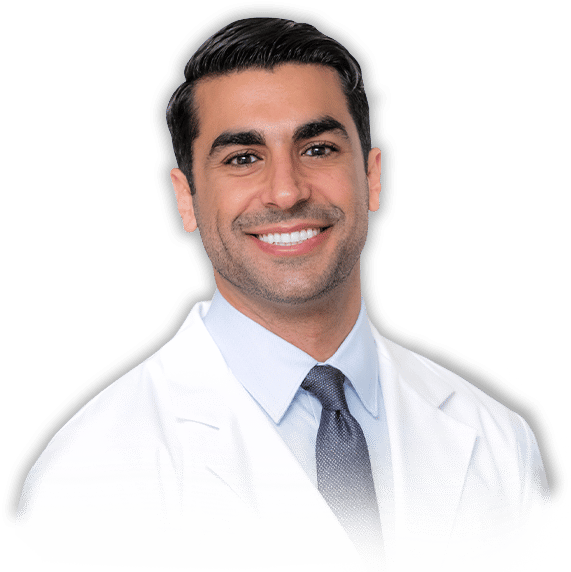
Dr. Justin Houman is a board-certified urologist, Fellow of the American College of Surgeons, and fellowship-trained microsurgeon in Male Reproductive Medicine and Surgery, training he completed at UCLA Medical Center. As an Assistant Professor of Urology at Cedars-Sinai Medical Center in Los Angeles, he focuses on the advanced diagnostic and microsurgical techniques that azoospermia often requires — the kind of subspecialty expertise that can change a man’s options entirely.
I recommend Dr. Houman for any urology need whatsoever. No question he will handle and take care of you and will make you feel comfortable throughout the entire process. He and his staff are reachable and answer all of your questions and concerns. If you are looking for someone like that, look no further.
What Is Azoospermia?
Azoospermia is the complete absence of sperm in the ejaculate, confirmed on at least two separate semen samples. According to Johns Hopkins Medicine, it affects roughly 1 percent of all men and about 10 percent of men who are infertile. Importantly, azoospermia describes a finding rather than a single disease — and it comes in two forms that point toward very different treatments:
- Obstructive Azoospermia: Sperm are produced normally, but a blockage prevents them from reaching the ejaculate.
- Nonobstructive Azoospermia: Sperm production within the testicles is reduced or impaired.
Distinguishing between these two types is the first and most important step, because it determines the entire treatment plan.


Common Causes of Azoospermia
Azoospermia can stem from genetic, anatomical, hormonal, or treatment-related factors. The most common contributors include:
Genetic Conditions
Klinefelter syndrome and Y-chromosome changes can affect sperm production.
Varicoceles
Enlarged scrotal veins can impair the testicles’ ability to produce sperm.
Blockages or Absent Ducts
Obstruction or congenital absence of the vas deferens can prevent sperm from entering the ejaculate.
Prior Vasectomy
A vasectomy intentionally creates obstructive azoospermia, which is often reversible.
Hormonal Imbalances
Disruptions in the hormonal signals that drive sperm production can be a contributing factor.
Medical Treatments
Certain medications, radiation, and chemotherapy can temporarily or permanently affect sperm production.
What to Expect: Diagnosis and Treatment
Because effective treatment depends entirely on the cause, accurate diagnosis comes first. Evaluation typically includes a repeat semen analysis, a hormone profile, and — when appropriate — genetic testing and imaging to classify the type of azoospermia. From there, Dr. Houman tailors the path to the findings:
- For obstructive azoospermia, surgery can sometimes reconstruct the blocked pathway, and men who are azoospermic after a vasectomy may be candidates for vasectomy reversal.
- When an identifiable hormonal cause is present, optimizing those hormones may help restore sperm production in select cases.
- When sperm cannot reach the ejaculate, microsurgical sperm retrieval can recover sperm directly from the testicle or epididymis. These retrieved sperm may then be used with IVF or ICSI to help achieve a pregnancy.

Frequently Asked Questions About Azoospermia
-
Not necessarily — in many men, sperm are still produced and can be retrieved even when none appear in the ejaculate, then used with IVF or ICSI to help achieve a pregnancy.
-
It is confirmed when no sperm are found on at least two separate semen samples, followed by hormone testing and, when needed, genetic testing or imaging to identify the cause.
-
Obstructive means sperm are produced but blocked from the ejaculate, while nonobstructive means production itself is reduced — and that distinction determines whether reconstruction, hormonal therapy, or sperm retrieval is the best route.
-
Yes — a vasectomy intentionally produces obstructive azoospermia, and many men who later want children are candidates for vasectomy reversal or sperm retrieval.
-
In specific cases with an identifiable hormonal cause, optimizing hormones may help, and general health improvements can support sperm production — but these are not universal fixes, and the right approach depends entirely on your diagnosis.
-
It is a precise procedure to recover sperm directly from the testicle or epididymis when none are present in the ejaculate. Learn more about microsurgical sperm retrieval.
Why Patients Choose Dr. Houman for Azoospermia Care
- Subspecialty Microsurgical Skill: Fellowship training supports advanced sperm-retrieval techniques that maximize the chance of finding viable sperm.
- Complete Diagnostic Workup: Each case begins with a thorough search for the cause rather than assumptions about the outcome.
- Coordinated Fertility Care: Dr. Houman works alongside reproductive endocrinologists to align retrieval with IVF or ICSI timing.
- Honest, Realistic Guidance: Patients receive a clear picture of their options, including when retrieval is and isn’t likely to succeed.
Meet Dr. Houman
Expert in Men’s Health with Tower Urology and Cedars Sinai
Dr. Justin Houman, MD, FACS is a board-certified urologist and fellowship-trained microsurgeon at Tower Urology, Cedars-Sinai Medical Center in Los Angeles. His subspecialty training in male reproductive medicine and microsurgery is held by fewer than 2% of practicing urologists in the United States.
His clinical focus is narrow by design. Varicoceles, chronic testicular pain, male infertility, vasectomy, testosterone optimization, erectile dysfunction, penile implant surgery, and Peyronie’s disease are not add-on services here. They are the practice. Patients travel from across the country and internationally for procedures, particularly microsurgical varicocelectomy, spermatic cord denervation, and inflatable penile implant surgery, that require a level of subspecialty training and surgical volume most urology practices do not have.
Schedule an Azoospermia Evaluation in Los Angeles
An azoospermia diagnosis raises difficult questions, but it rarely closes the door on fatherhood — and understanding the cause is the first step toward knowing your real options. Dr. Houman provides thorough, compassionate evaluation and advanced treatment for patients across Los Angeles and Southern California, with honest guidance every step of the way. Contact the Los Angeles office to schedule a consultation and learn what paths to parenthood may still be open to you.