Shockwave therapy comes up often in conversations about Peyronie’s disease, usually framed as a non-invasive way to straighten the penis. The honest reality is more limited — and worth understanding clearly. Low-intensity shockwave therapy may help with the penile pain that can accompany Peyronie’s, but the evidence does not support it as a way to correct curvature, and leading guidelines specifically advise against using it for that purpose. Dr. Justin Houman believes men deserve that straight answer before deciding.
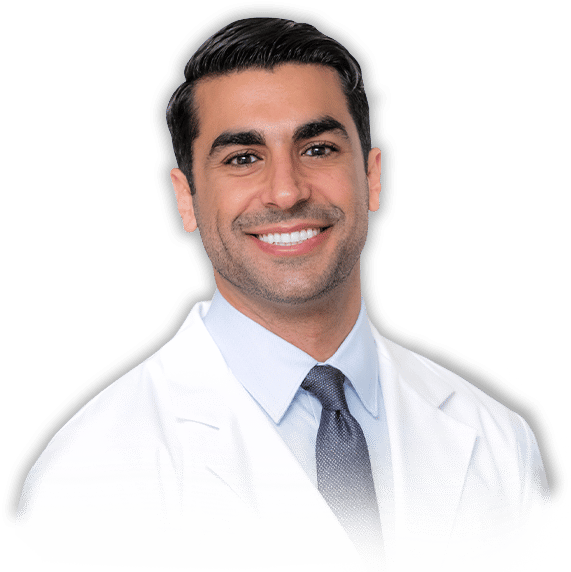
Dr. Justin Houman is a board-certified urologist, Fellow of the American College of Surgeons, and Assistant Professor of Urology at Cedars-Sinai Medical Center, fellowship-trained in male reproductive and sexual medicine at UCLA. As a Xiaflex Center of Excellence with deep experience across the full range of Peyronie’s treatments, he can place shockwave therapy in honest context — clear about the narrow role it may play and the proven options that actually address curvature. His expertise in men’s sexual health has been featured in national media including Men’s Health.
I was sent to Dr. Houman from another Urologist that was pretty confused about my situation. Dr. Houman’s team scheduled me quickly, and once we met, Dr. Houman took action immediately. He has a great team that is very nice. He is very personable, listens, jumps right into the trenches, explains everything, and is very responsive. I love working with Dr. Houman, definitely the best Doctor I’ve had!
What Is Shockwave Therapy?
Low-intensity shockwave therapy uses focused acoustic (sound) waves delivered through a handheld device to tissue in the penis. It’s non-invasive, performed in the office without needles or incisions, and generally well tolerated. In the context of men’s sexual health, it has been studied for both erectile dysfunction and Peyronie’s disease — but the evidence for each is quite different, and it’s important not to assume that interest in one means proven benefit in the other.
What Shockwave Therapy Can — and Can’t — Do for Peyronie’s
It’s important to separate hope from evidence. For the pain that some men experience during the active phase of Peyronie’s, low-intensity shockwave therapy may provide relief, and it has a good safety profile. What it does not reliably do is reduce the curvature or break down the plaque in a way that straightens the penis. Randomized studies have not shown a meaningful curvature benefit, which is why it shouldn’t be chosen as a treatment for the curve itself.
What the Guidelines and Evidence Say
Both the American Urological Association and the European Association of Urology have weighed the evidence and reached the same conclusion: shockwave therapy may be offered to help with penile pain, but it should not be used to reduce penile curvature or plaque size. It is also not FDA-approved for Peyronie’s disease. Notably, the pain of Peyronie’s often resolves on its own over time, which is part of why the guidelines view shockwave’s role as limited. Dr. Houman shares this evidence openly so your expectations are grounded in reality rather than marketing.


Proven Options for Penile Curvature
If your main concern is the curve itself — as it is for most men with Peyronie’s — there are treatments with real evidence behind them:
- Xiaflex Injections: The only FDA-approved medication for Peyronie’s disease, which breaks down plaque to reduce curvature.
- Traction Therapy: Stretching devices that can help reduce curvature and preserve length.
- Surgery: Plication, grafting, or a penile implant for significant, stable curvature.
A full overview of these is available on the Peyronie’s disease page.
Is Shockwave Therapy Right for You?
Shockwave therapy may be worth discussing for a specific, narrow situation: persistent penile pain during active Peyronie’s that hasn’t responded to other measures. It is not an appropriate choice for correcting curvature. Dr. Houman will help you weigh whether it has any role in your particular case and, far more often, guide you toward the treatments that genuinely address your curve.
Frequently Asked Questions About Shockwave Therapy for Peyronie’s
-
No — the evidence does not support shockwave therapy for reducing curvature, and major urology guidelines advise against using it for that purpose.
-
No — it’s not FDA-approved for Peyronie’s disease, and its role is limited to potentially helping with pain rather than correcting the curve.
-
Its main potential benefit in Peyronie’s is reducing penile pain during the active phase; even then, pain often improves on its own over time.
-
Proven options include the FDA-approved injectable Xiaflex, traction therapy, and surgery, depending on the severity and stability of the curve.
-
It has a good safety profile with mostly minor effects, but being safe isn’t the same as being effective for curvature, which it isn’t.
-
Marketing sometimes outpaces the evidence; Dr. Houman’s approach is to be transparent about what the research and guidelines actually support.
Why Choose Dr. Houman for Peyronie’s Care in Los Angeles
- Honest, Guideline-Based Counsel: Clear guidance on what shockwave can and can’t do for Peyronie’s.
- Xiaflex Center of Excellence: Proven, FDA-approved treatment for the curvature itself.
- Full Range of Peyronie’s Care: Every effective option, from injections to surgery.
- Evidence Over Marketing: Recommendations grounded in research, not hype.
Meet Dr. Houman
Expert in Men’s Health with Tower Urology and Cedars Sinai
Dr. Justin Houman, MD, FACS is a board-certified urologist and fellowship-trained microsurgeon at Tower Urology, Cedars-Sinai Medical Center in Los Angeles. His subspecialty training in male reproductive medicine and microsurgery is held by fewer than 2% of practicing urologists in the United States.
His clinical focus is narrow by design. Varicoceles, chronic testicular pain, male infertility, vasectomy, testosterone optimization, erectile dysfunction, penile implant surgery, and Peyronie’s disease are not add-on services here. They are the practice. Patients travel from across the country and internationally for procedures, particularly microsurgical varicocelectomy, spermatic cord denervation, and inflatable penile implant surgery, that require a level of subspecialty training and surgical volume most urology practices do not have.
Peyronie’s Disease Treatment in Los Angeles
When it comes to Peyronie’s disease, you deserve honesty about what works and what doesn’t. Rather than overpromising with shockwave therapy, Dr. Houman offers evidence-based, effective care — including the proven options that actually address curvature — for men across Los Angeles and Southern California. Contact the Los Angeles office to schedule a consultation and get a clear, straight answer about your treatment options.