A varicocele repair is a procedure where surgical precision directly shapes the outcome — which is why the technique matters as much as the decision to treat. Microsurgical varicocelectomy uses a high-powered operating microscope to target the problem veins while protecting the delicate arteries, lymphatics, and nerves around them. For men dealing with discomfort, testicular changes, or male fertility concerns linked to a varicocele, it offers meaningful relief through one of the smallest and most refined approaches available.
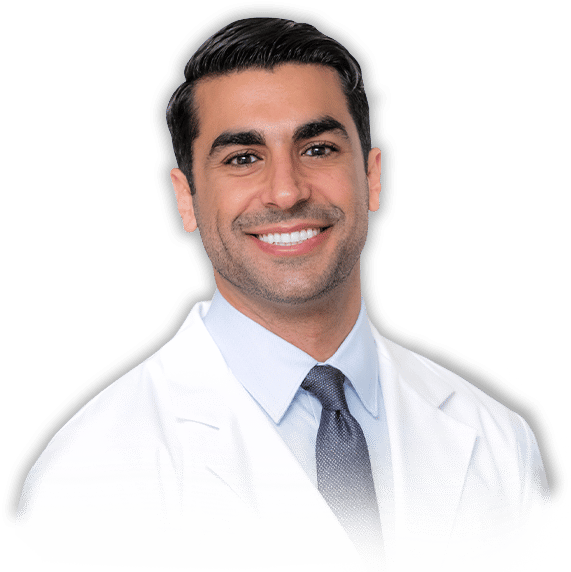
Dr. Justin Houman is a board-certified urologist, Fellow of the American College of Surgeons, and fellowship-trained microsurgeon in Male Reproductive Medicine and Surgery, training he completed at UCLA Medical Center. As an Assistant Professor of Urology at Cedars-Sinai Medical Center in Los Angeles, he performs varicocele repair using the microsurgical technique that the urologic literature widely regards as offering the lowest rates of recurrence and complications.
I was sent to Dr. Houman from another Urologist that was pretty confused about my situation. Dr. Houman’s team scheduled me quickly, and once we met, Dr. Houman took action immediately. He has a great team that is very nice. He is very personable, listens, jumps right into the trenches, explains everything, and is very responsive. I love working with Dr. Houman, definitely the best Doctor I’ve had!
What Are Varicoceles?
Varicoceles are enlarged veins within the scrotum, caused when the valves that regulate blood flow fail and blood begins to pool. This pooling raises the temperature around the testicles, which can impair sperm production and, over time, affect fertility. Some men also experience an aching discomfort that worsens with activity or in hot weather, while others have no symptoms at all and only learn of a varicocele during a fertility evaluation. Varicoceles are most common in men between 15 and 25, though they can develop at any age.


What Is a Microsurgical Varicocelectomy?
Microsurgical varicocelectomy is widely considered the most precise surgical technique for treating varicoceles. Working through an incision often less than an inch long, Dr. Houman uses an operating microscope to identify and tie off the enlarged veins while carefully preserving the surrounding arteries, lymphatic channels, and nerves. That level of visualization is the key advantage of the approach:
Structure Preservation
Magnified vision allows the artery, nerves, and lymphatics to be protected rather than disturbed.
Lower Complication Risk
Preserving these structures reduces the likelihood of hydrocele formation or artery injury.
Minimally Invasive Design
A small incision and refined technique support a faster, more comfortable recovery.
Fertility Improvement
Many men see gains in sperm count, motility, and morphology as healthy circulation is restored.
Is Microsurgical Varicocelectomy Right for You?
The right candidate is determined by symptoms and goals rather than the presence of a varicocele alone. Dr. Houman generally considers the procedure for men who are experiencing pain that interferes with daily life, signs of testicular atrophy, or infertility in which a varicocele appears to be a contributing factor. Because not every varicocele requires treatment, a thorough evaluation — including a physical exam and a semen analysis — helps clarify whether surgery is likely to make a meaningful difference.
What to Expect From the Procedure
The surgery typically takes 30 to 60 minutes and is performed on an outpatient basis, so most men return home the same day. Discomfort afterward is usually mild and managed with over-the-counter pain relievers and scrotal support, with a return to normal activities often within a few days to a week. Because sperm take roughly three months to mature, improvements in fertility parameters are generally assessed three to six months after surgery. Recovery is an essential part of a successful outcome — for a full, stage-by-stage walkthrough, see:

Frequently Asked Questions About Microsurgical Varicocelectomy
-
An operating microscope lets Dr. Houman see and preserve the small arteries, lymphatics, and nerves around the varicocele, which the urologic literature associates with lower recurrence and complication rates than non-microsurgical techniques.
-
Many men see improvements in sperm count, motility, and morphology after repair, though results vary; meaningful changes typically appear over three to six months as new sperm mature, and a follow-up semen analysis helps track progress.
-
The surgery usually takes 30 to 60 minutes and is performed on an outpatient basis, with most men returning to normal activities within a few days to a week.
-
Discomfort is generally mild and well controlled with over-the-counter pain relievers and scrotal support; the small incision, often under an inch, contributes to an easier recovery.
-
The microsurgical technique lowers the chance of complications such as hydrocele formation or artery injury, though as with any surgery, Dr. Houman reviews your specific risks beforehand.
-
Recurrence is uncommon with the microsurgical approach because the problem veins are precisely identified and addressed, and Dr. Houman monitors your recovery to confirm a durable result.
Why Patients Choose Dr. Houman for Varicocele Repair
- Microsurgical Specialization: Fellowship training in male reproductive microsurgery supports a precise, structure-preserving repair.
- High-Magnification Technique: An operating microscope allows the arteries, nerves, and lymphatics around each vein to be protected.
- Outpatient Convenience: The procedure is completed in under an hour, letting most men return home the same day.
- Fertility-Focused Follow-Up: Recovery and semen testing are tracked over time to confirm meaningful improvement.
Meet Dr. Houman
Expert in Men’s Health with Tower Urology and Cedars Sinai
Dr. Justin Houman, MD, FACS is a board-certified urologist and fellowship-trained microsurgeon at Tower Urology, Cedars-Sinai Medical Center in Los Angeles. His subspecialty training in male reproductive medicine and microsurgery is held by fewer than 2% of practicing urologists in the United States.
His clinical focus is narrow by design. Varicoceles, chronic testicular pain, male infertility, vasectomy, testosterone optimization, erectile dysfunction, penile implant surgery, and Peyronie’s disease are not add-on services here. They are the practice. Patients travel from across the country and internationally for procedures, particularly microsurgical varicocelectomy, spermatic cord denervation, and inflatable penile implant surgery, that require a level of subspecialty training and surgical volume most urology practices do not have.
Schedule a Varicocelectomy Consultation in Los Angeles
A varicocele is common, treatable, and — with the right surgical approach — often a turning point for both comfort and fertility. Dr. Houman offers thorough evaluations and refined microsurgical repair for patients across Los Angeles and Southern California, with honest guidance about whether surgery is the right step for you. Contact the Los Angeles office to schedule a consultation and learn what microsurgical varicocelectomy could mean for your health.