For men seeking a non-invasive, drug-free approach to erectile dysfunction, low-intensity shockwave therapy has drawn considerable interest. Performed in the office without needles, incisions, or medication, it uses gentle acoustic waves with the goal of improving blood flow to the penis. It’s important to understand from the outset that shockwave therapy is still an emerging treatment — promising for some men, but not yet a proven or FDA-approved option for ED — and Dr. Justin Houman believes patients deserve a clear, honest picture before deciding.
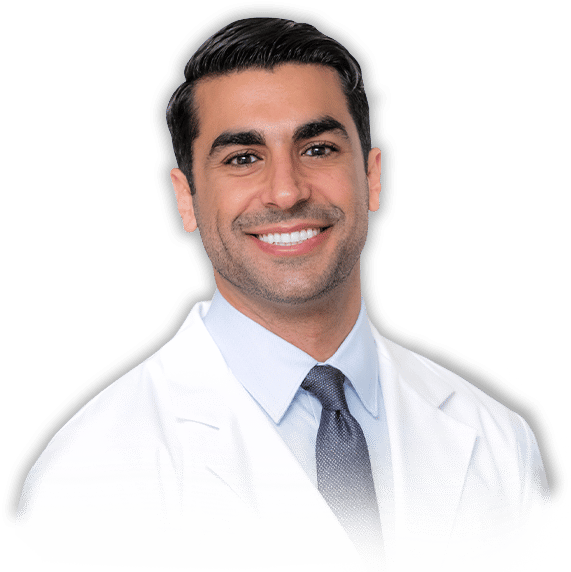
Dr. Justin Houman is a board-certified urologist, Fellow of the American College of Surgeons, and Assistant Professor of Urology at Cedars-Sinai Medical Center, fellowship-trained in male reproductive and sexual medicine at UCLA. A frequent voice on men’s sexual health in national media — including Men’s Health and the New York Post — and named a Top Doctor in Los Angeles by Los Angeles Magazine, he is well positioned to separate genuine innovation from marketing hype. That distinction matters with a therapy like shockwave, where enthusiasm has often outpaced the evidence.
I had an excellent experience with Dr. Justin Houman, who is truly an expert in male fertility. He took the time to listen carefully and explain all the available options in a way that was easy to understand. His approach is compassionate, professional, and very thorough. I felt confident knowing I was in the care of someone highly specialized in men’s reproductive health. If you are looking for a knowledgeable and caring physician to help with male fertility concerns, I highly recommend Dr. Houman.
How Shockwave Therapy for ED Works
Low-intensity shockwave therapy delivers gentle acoustic (sound) waves to the tissue of the penis through a handheld device. The proposed mechanism is that these waves may stimulate the formation of new blood vessels — a process called neoangiogenesis — which could, in theory, improve blood flow and erectile function over time. This is why the therapy is studied primarily in men whose ED is related to poor circulation. It’s worth emphasizing that this mechanism remains an area of active study rather than settled science.
What the Research Says About Shockwave Therapy
Here is the honest state of the evidence. Low-intensity shockwave therapy is not FDA-approved for erectile dysfunction, and the American Urological Association currently classifies it as investigational. A number of studies — many conducted outside the United States — suggest it may improve erections in men with mild, blood-flow-related ED, and professional groups generally consider it relatively safe. However, large, high-quality clinical trials are still lacking, treatment protocols are not standardized, and long-term outcomes are not fully understood. For these reasons, it is best viewed as a promising but unproven option, ideally pursued with realistic expectations.


Is Shockwave Therapy for ED Right for You?
Shockwave therapy is not appropriate for everyone, and it is not a guaranteed solution. The men studied most often are those with mild, vasculogenic ED — erectile dysfunction driven by reduced blood flow rather than hormonal, neurological, or psychological causes. It is sometimes used alongside established treatments such as oral medication rather than as a standalone fix. A thorough evaluation of the underlying cause of your ED, which you can explore further on the erectile dysfunction treatment page, is the best way to determine whether shockwave therapy is a sensible consideration.
What to Expect From ED Shockwave Treatment
The treatment itself is straightforward and non-invasive. A gel is applied to the area, and a handheld probe delivers gentle pulses, often producing only a mild tingling sensation. Each session takes roughly 15 to 20 minutes, requires no anesthesia, and allows you to return to normal activities immediately. Because results, when they occur, develop gradually, treatment is typically delivered across a series of sessions. The therapy is generally well tolerated with little to no downtime.
Frequently Asked Questions About Shockwave Therapy for ED
-
No — low-intensity shockwave therapy is not FDA-approved for erectile dysfunction and is currently considered investigational by the American Urological Association, so it should be approached with realistic expectations.
-
Some studies, particularly in men with mild blood-flow-related ED, suggest it may improve erections, but the evidence remains limited and not yet conclusive, and results vary from man to man.
-
No — it’s performed in the office without anesthesia, takes about 15 to 20 minutes, and most men feel only a mild tingling sensation.
-
It varies; treatment is typically delivered over a series of sessions, and Dr. Houman will outline a realistic plan based on your situation.
-
Men with mild, blood-flow-related (vasculogenic) ED are the most-studied candidates, and shockwave is sometimes combined with other treatments such as oral medication.
-
It’s generally well tolerated with little to no downtime, though as with any emerging therapy, Dr. Houman reviews the potential risks and the current limits of the evidence with you.
Why Choose Dr. Houman for ED Shockwave Therapy in Los Angeles
- Honest, Evidence-Based Counsel: Clear guidance on what shockwave therapy can and cannot do.
- Subspecialty ED Expertise: A fellowship-trained men’s health urologist evaluating whether it fits your specific case.
- Complete Treatment Context: Shockwave considered alongside established options, never in isolation.
- In-Office Convenience: Comfortable, non-invasive sessions performed in the Los Angeles office.
Meet Dr. Houman
Expert in Men’s Health with Tower Urology and Cedars Sinai
Dr. Justin Houman, MD, FACS is a board-certified urologist and fellowship-trained microsurgeon at Tower Urology, Cedars-Sinai Medical Center in Los Angeles. His subspecialty training in male reproductive medicine and microsurgery is held by fewer than 2% of practicing urologists in the United States.
His clinical focus is narrow by design. Varicoceles, chronic testicular pain, male infertility, vasectomy, testosterone optimization, erectile dysfunction, penile implant surgery, and Peyronie’s disease are not add-on services here. They are the practice. Patients travel from across the country and internationally for procedures, particularly microsurgical varicocelectomy, spermatic cord denervation, and inflatable penile implant surgery, that require a level of subspecialty training and surgical volume most urology practices do not have.
Shockwave Therapy for ED in Los Angeles
If you’re exploring non-invasive options for erectile dysfunction, shockwave therapy may be worth discussing — with realistic expectations and a clear understanding of the evidence. Dr. Houman offers candid, evidence-based consultations for men across Los Angeles and Southern California, helping you weigh shockwave therapy alongside established treatments. Contact the Los Angeles office to schedule a consultation and find out whether it’s a reasonable option for you.