The testicles are sensitive to a wide range of conditions — from harmless cysts to issues that need urgent attention — and most men aren’t sure which is which. That uncertainty is exactly why prompt evaluation matters. A new lump, swelling, or pain is almost always worth checking, both for peace of mind and because some testicular conditions are far easier to treat when caught early. Knowing the warning signs is the first step to protecting your health.
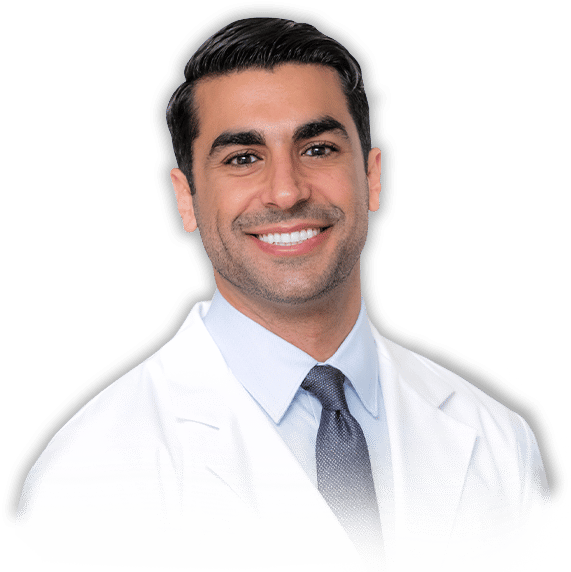
Dr. Justin Houman is a board-certified urologist, Fellow of the American College of Surgeons, and Assistant Professor of Urology at Cedars-Sinai Medical Center, with fellowship training in male reproductive medicine and microsurgery held by fewer than 2% of urologists nationwide. His practice is recognized as a Center of Excellence for chronic testicular pain, and patients travel from across the country for his microsurgical expertise. Featured in national media including Men’s Health and the New York Post, he cares for the full range of testicular conditions — from cysts and swelling to pain and cancer concerns — with both advanced surgical skill and a reassuring, thorough approach.
I highly recommend Dr. Houman. He’s a great listener and has provided me with a treatment that has made a positive impact on my life. I trust him 100%. After years of suffering, all of my symptoms have been alleviated and all the health benefits are amazing.
Testicular Cancer: Know the Signs
Testicular cancer is the most common cancer in young men, typically between the ages of 15 and 35 — and it’s also one of the most treatable, with excellent outcomes when found early. The most common sign is a painless lump or swelling in a testicle, though some men notice a change in firmness, a dull ache in the groin or lower abdomen, or a feeling of heaviness. Any new lump or change should be evaluated promptly. A simple monthly self-exam is one of the best ways to catch changes early, and Dr. Houman can show you exactly what to look for.
Testicular Torsion: A Medical Emergency
Testicular torsion is a true medical emergency. It happens when a testicle twists, cutting off its blood supply, and it can lead to loss of the testicle within hours if not treated. Seek emergency care immediately for sudden, severe testicular pain, especially when accompanied by swelling, nausea or vomiting, or lower abdominal pain. When it comes to torsion, every minute counts — do not wait to see if the pain passes on its own.


Testicular Pain and Other Common Conditions
Most testicular concerns are not emergencies, and many are easily treated:
- Testicular Pain: Pain can stem from infection, injury, a varicocele, or chronic nerve-related causes; as a Center of Excellence for chronic testicular pain, Dr. Houman offers advanced options when pain persists.
- Epididymitis and Infections: Inflammation or infection of the epididymis can cause pain and swelling and usually responds well to treatment.
- Spermatocele: A fluid-filled cyst near the testicle that’s typically harmless, requiring treatment only if it becomes uncomfortable.
- Hydrocele: A painless buildup of fluid around the testicle that can be treated if it becomes bothersome — more on the hydrocele page.
When to See a Doctor About Testicular Symptoms
Some testicular symptoms can wait for a routine visit, while others can’t. Make an appointment promptly for any new lump, swelling, or persistent ache, and seek emergency care immediately for sudden, severe testicular pain. When in doubt, it’s always safer to get checked — most causes are benign, and the ones that aren’t are best caught early.
Frequently Asked Questions About Testicular Health
-
Any new lump should be evaluated promptly; while many are benign, a painless lump is the most common sign of testicular cancer, which is highly treatable when caught early.
-
It causes sudden, severe testicular pain, often with swelling or nausea, and it is a medical emergency — seek immediate care, as the testicle can be lost within hours.
-
It’s the most common cancer in young men aged 15 to 35, with excellent cure rates, especially when found early through self-exams and prompt evaluation.
-
Yes — a quick monthly self-exam helps you notice changes early, and Dr. Houman can show you exactly what to feel for.
-
A spermatocele is a fluid-filled cyst near the testicle, while a hydrocele is fluid buildup around the testicle; both are often harmless and treated only if bothersome.
-
Persistent testicular pain is worth evaluating to identify the cause, which may be infection, a varicocele, or a chronic pain condition, all of which can be treated.
Why Choose Dr. Houman for Testicular Health in Los Angeles
- Center of Excellence for Testicular Pain: Advanced expertise for chronic and complex pain.
- Prompt Evaluation of Lumps and Swelling: Fast, thorough answers when something feels off.
- Full Range of Testicular Care: From cysts and hydroceles to cancer concerns and torsion.
- Reassuring, Discreet Expertise: Experienced urologic care for a sensitive area.
Meet Dr. Houman
Expert in Men’s Health with Tower Urology and Cedars Sinai
Dr. Justin Houman, MD, FACS is a board-certified urologist and fellowship-trained microsurgeon at Tower Urology, Cedars-Sinai Medical Center in Los Angeles. His subspecialty training in male reproductive medicine and microsurgery is held by fewer than 2% of practicing urologists in the United States.
His clinical focus is narrow by design. Varicoceles, chronic testicular pain, male infertility, vasectomy, testosterone optimization, erectile dysfunction, penile implant surgery, and Peyronie’s disease are not add-on services here. They are the practice. Patients travel from across the country and internationally for procedures, particularly microsurgical varicocelectomy, spermatic cord denervation, and inflatable penile implant surgery, that require a level of subspecialty training and surgical volume most urology practices do not have.
Testicular Health Care in Los Angeles
Whether you’ve found a lump, are dealing with ongoing discomfort, or simply want peace of mind, prompt evaluation is always worthwhile. Dr. Houman offers expert, discreet testicular care for men across Los Angeles and Southern California — and treats every concern with the seriousness and reassurance it deserves. Contact the Los Angeles office to schedule a consultation, and never hesitate to seek emergency care for sudden, severe testicular pain.