Choosing a vasectomy is meant to be permanent, but life changes — a new relationship, a renewed desire for children, or sometimes ongoing discomfort. Whatever the reason, a vasectomy reversal can restore the flow of sperm and the possibility of conceiving naturally. It’s a delicate microsurgical procedure, and in skilled hands, it offers many men a real path back to fertility.
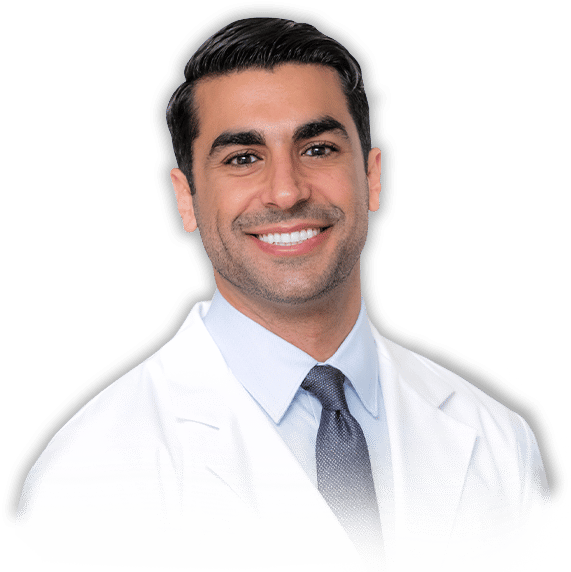
Dr. Justin Houman is a board-certified urologist, Fellow of the American College of Surgeons, and Assistant Professor of Urology at Cedars-Sinai Medical Center, with fellowship training in male reproductive medicine and microsurgery at UCLA — subspecialty training held by a small fraction of urologists. Vasectomy reversal is among the most technically demanding microsurgeries in men’s health, performed under a high-powered operating microscope with sutures finer than a human hair, and his microsurgical background is exactly what the procedure requires. His expertise in male reproductive health has been featured in national media including the New York Post.
I was sent to Dr. Houman from another Urologist that was pretty confused about my situation. Dr. Houman’s team scheduled me quickly, and once we met, Dr. Houman took action immediately. He has a great team that is very nice. He is very personable, listens, jumps right into the trenches, explains everything, and is very responsive. I love working with Dr. Houman, definitely the best Doctor I’ve had!
What Is a Vasectomy Reversal?
A vasectomy reversal is a microsurgical procedure that reconnects the vas deferens — the tubes that were cut and sealed during the original vasectomy — to restore the flow of sperm into the semen. Once sperm can again reach the ejaculate, natural conception becomes possible. It’s the only approach that allows a couple to conceive on their own rather than through assisted reproduction, which is part of its appeal for many men.
How Microsurgical Vasectomy Reversal Works
The procedure is performed under a high-powered surgical microscope, because the structures involved are extraordinarily small. Dr. Houman first examines the fluid from the vas deferens to determine the right approach. If sperm are present, a vasovasostomy — reconnecting the two cut ends of the vas directly — is performed. If no sperm are present, it usually means a secondary blockage has developed in the epididymis over time, and the more complex vasoepididymostomy is needed instead, connecting the vas directly to the epididymis to bypass that blockage. Vasoepididymostomy is more technically demanding and typically has a somewhat longer path to sperm return, but it’s often the only technique that will work once a blockage has developed. This determination is made in the operating room, since it depends on what the fluid shows that day, not simply on how long it’s been since the original vasectomy, which is why it’s important that your surgeon be skilled in both techniques.
Vasectomy Reversal Success Rates
Success is measured in two ways, and understanding the difference matters. Patency refers to the return of sperm to the ejaculate, while pregnancy is the ultimate goal. Pregnancy rates are always lower than patency rates, because conception also depends on the couple — especially the female partner’s fertility and age. The single biggest factor in the odds is the time since your vasectomy: when reversal is performed within a few years, sperm return to the ejaculate in roughly 90% or more of men, with rates gradually declining the longer it has been. Because of these variables, Dr. Houman provides each man a realistic, individualized estimate rather than a one-size-fits-all promise.


Reasons to Consider a Vasectomy Reversal
Men pursue reversal for several reasons:
New Family Planning Goals
A change of heart about having children, often after a new relationship or remarriage.
Desire for More Children
Wanting to expand a family after a previous vasectomy.
Post-Vasectomy Pain
Some men pursue reversal to relieve chronic testicular pain that followed a vasectomy.
Preference for Natural Conception
Choosing reversal over assisted reproduction to conceive naturally.
Reversal vs. Other Fertility Options
For couples hoping to conceive after a vasectomy, there are two main paths: reversal, which restores natural fertility, and surgical sperm retrieval combined with IVF. Reversal allows for natural conception and, once successful, the possibility of conceiving again without further procedures. Sperm retrieval with IVF may make more sense in certain situations, such as a very long interval since the vasectomy, an existing female-factor consideration that would call for IVF regardless, or a couple who wants to bank embryos for future pregnancies. Cost, invasiveness, and time to pregnancy also weigh differently for each path. Dr. Houman walks each couple through both options during consultation so they can weigh the tradeoffs based on their own goals, timeline, and circumstances.
What to Expect: Recovery
Vasectomy reversal is an outpatient microsurgical procedure. Most patients go home the same day with scrotal support and are advised to ice the area for the first 24 to 48 hours. Light activity can typically resume within a couple of days, and most men return to non-strenuous work within three to four days. Strenuous exercise and sexual activity are generally restricted for three to four weeks while the surgical site fully heals, and Dr. Houman sees patients back for a follow-up visit within the first one to two weeks to check on healing. Sperm return is tracked with semen analysis, typically starting around six weeks after surgery and continuing periodically over the following months, since it can take time for sperm to reappear in the ejaculate even after a technically successful reversal.
What If a Previous Reversal Failed? (Redo Reversals)
A first reversal doesn’t always succeed, most often because scar tissue has blocked the repaired connection, or because the technique used didn’t match what the vas fluid actually showed at the time of surgery. A second attempt is a well-established option, and outcomes for redo reversals can be comparable to a first attempt when the original point of failure is correctly identified and addressed. Dr. Houman reviews the prior operative report and re-examines the vas fluid at the time of surgery to determine whether a vasovasostomy or vasoepididymostomy is the right approach this time, rather than simply repeating whatever was done before.
Frequently Asked Questions About Vasectomy Reversal
-
Patency means sperm return to the ejaculate, while pregnancy is actual conception; pregnancy rates are always lower because conception also depends on the female partner’s fertility.
-
Yes — it’s the biggest factor; reversals done within a few years tend to have higher success, with rates gradually declining the longer it has been.
-
A vasovasostomy reconnects the vas to itself, while the more complex vasoepididymostomy connects the vas to the epididymis when a secondary blockage exists.
-
Sperm usually begin reappearing in the ejaculate over several months, and Dr. Houman monitors progress with follow-up semen analyses.
-
Neither is universally better — reversal allows natural conception and repeat pregnancies, while sperm retrieval with IVF is another path; the best choice depends on your situation.
-
In some men, yes — reversal can relieve chronic post-vasectomy pain, which is one reason men pursue it beyond fertility.
-
A redo reversal is a well-established option, and success rates can be comparable to a first attempt when the cause of the earlier failure is correctly identified. Dr. Houman reviews your prior operative report and re-examines the vas fluid during surgery to choose the right technique this time.
Why Choose Dr. Houman for Vasectomy Reversal in Los Angeles
- Fellowship-Trained Microsurgeon: Subspecialty training that vasectomy reversal genuinely demands.
- Skilled in Both Techniques: Prepared for vasovasostomy or the more complex vasoepididymostomy.
- Realistic, Honest Counsel: Individualized success estimates, not blanket promises.
- Natural Conception Focus: Restoring fertility so couples can conceive without ongoing procedures.
Meet Dr. Houman
Expert in Men’s Health with Tower Urology and Cedars Sinai
Dr. Justin Houman, MD, FACS is a board-certified urologist and fellowship-trained microsurgeon at Tower Urology, Cedars-Sinai Medical Center in Los Angeles. His subspecialty training in male reproductive medicine and microsurgery is held by fewer than 2% of practicing urologists in the United States.
His clinical focus is narrow by design. Varicoceles, chronic testicular pain, male infertility, vasectomy, testosterone optimization, erectile dysfunction, penile implant surgery, and Peyronie’s disease are not add-on services here. They are the practice. Patients travel from across the country and internationally for procedures, particularly microsurgical varicocelectomy, spermatic cord denervation, and inflatable penile implant surgery, that require a level of subspecialty training and surgical volume most urology practices do not have.
Vasectomy Reversal in Los Angeles
If your family plans have changed, a vasectomy reversal may reopen the door to having children — and the experience of your microsurgeon makes a meaningful difference in the outcome. Dr. Houman brings advanced microsurgical skill and honest, individualized guidance to men across Los Angeles and Southern California. Contact the Los Angeles office to schedule a consultation and discuss whether reversal is right for you.