Testicular & Groin Pain After Hernia Repair
Persistent testicular or groin pain after inguinal hernia surgery can be frustrating, disruptive, and difficult to diagnose. For some men, discomfort continues long after the surgical site has healed. Others develop pain months or even years after their hernia repair. The pain may be located in the groin, testicle, spermatic cord, or scrotum, or it may radiate between these areas.
When testicular pain persists after hernia surgery, finding the source of the pain is critical. Post-hernia repair pain can involve nerves, scar tissue, the spermatic cord, inflammation surrounding surgical mesh, or other structures in the groin and scrotum. Importantly, groin pain and true testicular pain after hernia repair are not necessarily the same problem, and the appropriate treatment depends on identifying which structures are responsible.
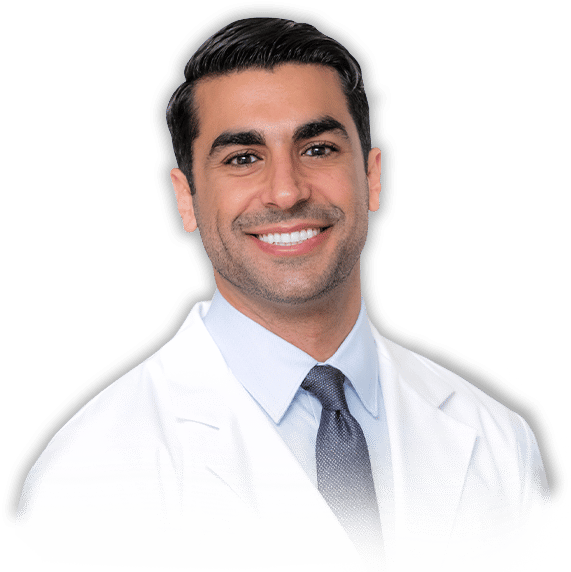
Dr. Justin Houman, MD, FACS is a board-certified urologist and fellowship-trained microsurgeon in Los Angeles who specializes in chronic testicular pain, also known as orchialgia or chronic scrotal content pain. His practice is a Center of Excellence for Testicular Pain and Orchialgia, and he routinely evaluates complex and previously treated cases, including men with persistent testicular pain following inguinal hernia repair.
Dr. Houman has performed more than 1,000 microsurgical spermatic cord denervation procedures and combines advanced microsurgical expertise with a diagnostic approach designed to identify the underlying source of pain before recommending treatment.
I highly recommend Dr. Houman. He’s a great listener and has provided me with a treatment that has made a positive impact on my life. I trust him 100%. After years of suffering, all of my symptoms have been alleviated and all the health benefits are amazing.
Can Hernia Repair Cause Testicular or Groin Pain?
Yes. Some discomfort is expected during the normal recovery period following inguinal hernia repair. Persistent pain, however, can sometimes continue after the tissues have otherwise healed.
Chronic postoperative inguinal pain is a recognized complication of inguinal hernia surgery. While chronic groin pain is more commonly described, some patients experience pain involving the testicle or spermatic cord following open, laparoscopic, or robotic hernia repair.
The relationship between hernia surgery and testicular pain can be complex because several important nerves, blood vessels, and reproductive structures travel through the inguinal region.
For this reason, successful treatment begins by determining what is actually generating the pain, rather than assuming that every patient with pain after hernia repair has the same condition.
What Does Testicular Pain After Hernia Repair Feel Like?
Symptoms vary considerably from one patient to another.
Post-hernia repair pain may feel like:
- A persistent ache in one testicle
- Burning or shooting groin pain
- Sharp or stabbing testicular pain
- Tenderness along the spermatic cord
- Pain radiating from the groin into the scrotum
- Increased sensitivity around the previous surgical area
- Pain with exercise or physical activity
- Discomfort while sitting
- Pain during sexual activity or ejaculation
- Pain when the testicle or groin is touched
- A pulling, tight, or pressure-like sensation
Some men have primarily groin pain, while others experience pain centered in the testicle or spermatic cord. Still others have a combination of both.
That distinction can provide important clues about the source of the pain.


Why Can Testicular Pain Develop After Inguinal Hernia Surgery?
There is no single cause of testicular pain following hernia repair. Potential mechanisms include nerve injury or irritation, scar formation, inflammatory changes, involvement of the spermatic cord, and effects associated with the previous surgical repair.
Nerve Injury or Entrapment
Several nerves travel through the inguinal region and may potentially become irritated, injured, compressed, or incorporated into scar tissue following surgery.
Neuropathic pain often produces burning, shooting, electrical, or hypersensitive sensations, although symptoms vary.
Spermatic Cord Nerve Pain
The spermatic cord contains structures supplying the testicle as well as nerve fibers capable of transmitting pain.
In some patients, chronic pain after hernia repair may involve nerve fibers associated with the spermatic cord rather than, or in addition to, the nerves of the groin itself.
This distinction is particularly important because treatment for chronic groin pain does not necessarily address chronic testicular pain.
Scar Tissue and Fibrosis
Healing after surgery naturally produces scar tissue. In certain patients, fibrosis or scar formation may involve structures surrounding the spermatic cord or nerves and contribute to persistent discomfort.
Mesh-Associated Inflammation or Scarring
Many inguinal hernias are repaired using surgical mesh. Mesh itself does not mean that it is responsible for a patient’s pain, and many patients with mesh repairs never develop chronic symptoms.
However, inflammation, fibrosis, contraction, or interaction between mesh and nearby nerves or spermatic cord structures may contribute to pain in some patients.
Determining whether mesh is actually relevant to an individual patient’s symptoms requires careful evaluation.
Vascular or Testicular Causes
Less commonly, injury or compromise involving structures supplying the testicle can contribute to post-operative testicular symptoms.
A urologic evaluation is important because testicular pain should not automatically be attributed to the previous hernia repair without considering other possible causes.
Referred Pain
Pain perceived in the testicle can originate elsewhere. Pelvic floor dysfunction, hip or spinal conditions, urinary tract problems, and other sources of referred pain may sometimes produce symptoms that feel testicular in origin.
This is another reason that establishing the correct diagnosis is essential before pursuing additional surgery.
Groin Pain vs. Testicular Pain After Hernia Repair
One of the most important parts of evaluating pain following hernia surgery is determining where the pain originates.
Chronic postoperative inguinal pain, sometimes called inguinodynia, generally refers to persistent pain involving the groin after hernia surgery.
Chronic orchialgia or chronic scrotal content pain refers to persistent pain involving the testicle or other structures within the scrotum.
A patient can have either condition or both simultaneously.
This distinction matters because groin pain may involve nerves such as the ilioinguinal, iliohypogastric, or genitofemoral nerves, while true testicular pain may involve neural structures associated with the spermatic cord.
For men whose pain extends into the testicle, evaluation by a urologist experienced in chronic orchialgia can be an important part of determining which structures are involved and which treatment, if any, is appropriate.


How Is Testicular Pain After Hernia Repair Evaluated?
There is no single test that identifies every cause of post-hernia repair testicular pain.
Dr. Houman’s evaluation begins with a detailed history of the original hernia, the surgery performed, when the pain began, where it is located, what makes it better or worse, and which treatments have already been attempted.
When available, reviewing the operative report from the original hernia repair can also provide valuable information.
Evaluation may include:
- There is no single test that identifies every cause of post-hernia repair testicular pain.
- Dr. Houman’s evaluation begins with a detailed history of the original hernia, the surgery performed, when the pain began, where it is located, what makes it better or worse, and which treatments have already been attempted.
- When available, reviewing the operative report from the original hernia repair can also provide valuable information.
- Evaluation may include:
- Detailed physical examination
- Assessment of the testicle, epididymis, spermatic cord, and groin
- Review of previous hernia surgery and operative records
- Scrotal ultrasound when appropriate
- Laboratory or urine testing when clinically indicated
- Evaluation for other urologic causes of testicular pain
- Assessment for referred or pelvic pain
- Diagnostic spermatic cord block in appropriately selected patients
The objective is not simply to confirm that the patient hurts. It is to determine which anatomical structure or pain pathway is most likely responsible.
The Role of a Spermatic Cord Block
For selected men with chronic testicular or spermatic cord pain, a diagnostic spermatic cord block can provide particularly useful information.
A local anesthetic is placed around the relevant structures of the spermatic cord to temporarily interrupt pain transmission.
If the patient’s typical testicular pain improves substantially during the period of the block, that response can suggest that nerves traveling through the spermatic cord are important contributors to the pain.
The block can therefore serve two purposes: temporary relief and, more importantly, diagnostic information that can help determine whether a patient may benefit from a more durable nerve-targeted treatment.
Not every patient with post-hernia pain is a candidate for spermatic cord denervation, which is why this diagnostic step can be so valuable.
Treatment for Testicular Pain After Hernia Repair
Treatment depends on the suspected cause, severity and duration of symptoms, previous treatments, examination findings, and diagnostic testing.
Whenever appropriate, conservative options are generally considered before surgery.
These may include medications, anti-inflammatory treatment, treatment directed toward neuropathic pain, pelvic floor physical therapy, activity modification, or other therapies based on the suspected pain mechanism.
For men whose pain persists despite conservative care, additional targeted treatment may be considered.

Microsurgical Spermatic Cord Denervation
For appropriately selected patients with chronic testicular pain involving the spermatic cord, microsurgical spermatic cord denervation (MSCD) can provide a testicle-sparing surgical option.
During the procedure, pain-carrying nerve fibers within the spermatic cord are carefully addressed under microsurgical magnification while structures important to testicular function are preserved.
Patient selection is critical. A favorable response to a diagnostic spermatic cord block can help predict whether the pain is being transmitted through pathways that can potentially be addressed with denervation.
Dr. Houman has performed more than 1,000 microsurgical spermatic cord denervations, including complex cases involving previous surgery and persistent pain.
Does Hernia Mesh Need to Be Removed?
Not necessarily.
The presence of mesh does not establish that mesh is causing a patient’s pain, and removing mesh is not automatically the appropriate treatment for testicular pain after hernia repair.
Some patients may have primarily neuropathic groin pain, others may have spermatic cord or testicular pain, and still others may have multiple contributing mechanisms.
If evaluation suggests that the principal problem involves the original hernia repair or mesh itself, coordination with a surgeon who specializes in complex hernia revision may be appropriate.
Dr. Houman’s role is particularly important when testicular, scrotal, or spermatic cord pain is a significant component of the patient’s symptoms.
What If My Ultrasound Is Normal?
A normal ultrasound can be reassuring because it may help exclude certain structural abnormalities, but it does not mean that chronic testicular pain is imaginary or that nothing can be done.
Neuropathic pain and pain originating from microscopic nerve pathways may not be visible on standard imaging.
For men with persistent pain after hernia repair, the history, physical examination, distribution of symptoms, prior operative details, and response to targeted diagnostic blocks can sometimes provide information that imaging cannot.
When Should I See a Urologist for Testicular Pain After Hernia Surgery?
Persistent or worsening testicular pain following hernia repair deserves medical evaluation, particularly when symptoms interfere with exercise, sitting, work, sleep, sexual activity, or everyday life.
However, sudden or severe testicular pain should be evaluated urgently. Acute testicular pain can have causes unrelated to a previous hernia repair, including testicular torsion and other conditions requiring prompt medical attention.
Do not assume that new or severe testicular pain is simply a consequence of previous surgery.
Why Choose Dr. Justin Houman for Post-Hernia Repair Testicular Pain?
Chronic testicular pain can be particularly challenging because successful treatment depends on determining why the patient hurts.
Dr. Justin Houman, MD, FACS brings advanced subspecialty training and extensive microsurgical experience to complex testicular pain cases.
He is:
- Board-certified in urology
- Fellowship-trained in Male Reproductive Medicine and Surgery at UCLA
- A Fellow of the American College of Surgeons
- Assistant Professor of Urology at Cedars-Sinai Medical Center
- A fellowship-trained microsurgeon
- Director of a Center of Excellence for Testicular Pain and Orchialgia
- Experienced in more than 1,000 microsurgical spermatic cord denervation procedures
Experienced in complex and previously treated chronic testicular pain cases
Dr. Houman’s practice focuses heavily on male reproductive medicine, microsurgery, chronic testicular pain, and complex men’s urologic conditions.
Patients seek his expertise from throughout Southern California as well as nationally and internationally.
Meet Dr. Houman
Expert in Men’s Health with Tower Urology and Cedars Sinai
Dr. Justin Houman, MD, FACS is a board-certified urologist and fellowship-trained microsurgeon at Tower Urology, Cedars-Sinai Medical Center in Los Angeles. His subspecialty training in male reproductive medicine and microsurgery is held by fewer than 2% of practicing urologists in the United States.
His clinical focus is narrow by design. Varicoceles, chronic testicular pain, male infertility, vasectomy, testosterone optimization, erectile dysfunction, penile implant surgery, and Peyronie’s disease are not add-on services here. They are the practice. Patients travel from across the country and internationally for procedures, particularly microsurgical varicocelectomy, spermatic cord denervation, and inflatable penile implant surgery, that require a level of subspecialty training and surgical volume most urology practices do not have.
Post-Hernia Repair Testicular Pain Specialist in Los Angeles
Men with persistent testicular pain after inguinal hernia surgery are sometimes left in an uncomfortable position: the hernia has been repaired, imaging may appear normal, yet the pain remains.
Persistent pain does not automatically mean another operation is necessary. It means the source of the pain needs to be identified as accurately as possible.
At his Los Angeles practice, Dr. Justin Houman evaluates men with chronic testicular, spermatic cord, and scrotal pain, including complex pain following inguinal hernia repair. His approach combines detailed diagnosis with advanced microsurgical expertise so that treatment is directed toward the structures actually responsible for the patient’s symptoms.
For men whose post-hernia pain involves the testicle or spermatic cord, a specialized urologic evaluation can help determine whether the problem is nerve-related, associated with another testicular condition, referred from another area, or potentially amenable to targeted treatment.
Frequently Asked Questions About Testicular Pain After Hernia Repair
-
Temporary groin and scrotal discomfort can occur during recovery from inguinal hernia surgery. Pain that persists well beyond the expected healing period, becomes chronic, worsens, or significantly affects daily activities should be evaluated. Persistent pain can have several causes and should not automatically be attributed to the mesh or the original surgery.
-
Mesh-related inflammation or fibrosis can potentially contribute to pain in some patients, but the presence of mesh does not prove that it is causing the symptoms. Nerve irritation, spermatic cord involvement, scar tissue, referred pain, and unrelated testicular conditions can produce similar symptoms. Careful diagnosis is important before considering mesh-related treatment.
-
Delayed or persistent pain may involve scar tissue, nerve irritation or entrapment, spermatic cord nerve pathways, inflammatory changes, or another urologic condition. The timing of symptoms is one part of the diagnostic evaluation but does not by itself identify the cause.
-
Yes. Nerve injury, irritation, or entrapment can contribute to chronic pain following inguinal hernia repair. However, several different nerves and pain pathways may be involved, so determining whether the pain is primarily in the groin, spermatic cord, or testicle is important when considering treatment.
-
Orchialgia means testicular pain. Chronic orchialgia generally describes testicular or scrotal-content pain that persists for at least three months and interferes with normal activities. Previous inguinal hernia repair is one recognized potential cause of chronic orchialgia.
-
A spermatic cord block can provide valuable diagnostic information in appropriately selected patients. Significant temporary relief following the block suggests that pain pathways traveling through the spermatic cord may be contributing to the symptoms and can help guide decisions about further treatment.
-
For carefully selected patients whose chronic testicular pain is transmitted through nerve pathways in the spermatic cord, microsurgical spermatic cord denervation may be considered after conservative treatments have failed. It is not appropriate for every type of post-hernia pain, which is why determining the source of the pain and assessing the response to a diagnostic cord block are important.
-
That depends on the symptoms. Pain primarily involving the hernia repair, abdominal wall, or groin may require evaluation by a hernia specialist. Persistent pain involving the testicle, scrotum, or spermatic cord warrants urologic evaluation. Some complex cases benefit from both specialties.
-
No. Ultrasound is useful for evaluating many structural causes of testicular and scrotal pain, but nerve-related pain may not appear on imaging. A normal ultrasound therefore does not necessarily explain persistent symptoms or exclude all treatable causes.
-
Yes. Orchiectomy is not a first-line treatment for chronic testicular pain. Depending on the cause, treatment may include conservative therapies, nerve-directed treatment, pelvic floor therapy, diagnostic blocks, or testicle-sparing microsurgical procedures such as spermatic cord denervation in appropriately selected patients.
Find Answers for Testicular Pain After Hernia Repair in Los Angeles
If testicular or groin pain has continued after your inguinal hernia repair, the next step is determining why the pain persists.
Dr. Justin Houman provides specialized evaluation and treatment for chronic testicular pain, orchialgia, spermatic cord pain, and complex post-surgical cases in Los Angeles. His fellowship training in male reproductive medicine and microsurgery, academic role at Cedars-Sinai, Center of Excellence designation, and extensive experience with microsurgical spermatic cord denervation provide a level of specialization particularly relevant to men whose testicular pain has persisted despite previous treatment.
Schedule a consultation with Dr. Houman in Los Angeles to identify the potential source of your post-hernia repair testicular pain and discuss the treatment options appropriate for your individual condition.