Chronic testicular pain has a way of quietly taking over — disrupting work, sleep, intimacy, and peace of mind — and far too many men are simply told to manage it. For those across Santa Monica and the surrounding coastal communities, that doesn’t have to be the answer. In most cases, persistent testicular pain has a specific, treatable cause, and finding it takes a specialist with deep training in male pelvic anatomy and microsurgery.
Dr. Justin Houman is a board-certified urologist and Assistant Professor of Urology at Cedars-Sinai Medical Center, fellowship-trained in male reproductive medicine and microsurgery — a subspecialty held by only a small percentage of urologists nationwide. His practice has been designated a Center of Excellence for Testicular Pain and Orchialgia, and he has performed more than 1,000 microsurgical spermatic cord denervations. That focused expertise is what allows Santa Monica patients to access genuine, lasting solutions rather than another round of treatments that don’t reach the source.
Dr Justin Houman is a wonderful guy. Go to him and feel confident in his care. He is easy to talk to about topics that are not easy. Hes funny, knowledgeable, reassuring, open to questions, nonjudgmental. Really feels like hes on your side. He also listened to me about a symptom another doc downplayed, and ended up solving the problem. I cant recommend this kind man highly enough!
What Is Chronic Testicular Pain?
Chronic testicular pain, or orchialgia, is discomfort in one or both testicles that lasts longer than three months. It can feel like a dull, constant ache or sharper pain tied to activity, and it affects far more men than most people realize. Generic pain management often fails because it doesn’t address the underlying neurological or vascular mechanisms that actually sustain the pain — which is exactly why a targeted, specialist evaluation matters.
When to See a Testicular Pain Specialist
It may be time to seek specialized care if you recognize any of the following:
- Pain that has lasted more than three months
- Discomfort that worsens with activity, sitting, or after a vasectomy
- Swelling, tenderness, or a change in the size of a testicle
- Pain that hasn’t improved despite previous treatments or provider visits


Common Causes and How They’re Found
Effective treatment depends on identifying the true source, which can range from nerve irritation within the spermatic cord to varicoceles, prior inflammation, or pain following a vasectomy or hernia repair. Because a standard ultrasound often appears normal even when pain is very real, Dr. Houman relies on a deliberate, stepwise evaluation: a thorough history and exam, targeted imaging, and — when the source remains unclear — a diagnostic nerve block. Numbing the spermatic cord and gauging the response helps confirm whether the nerves are responsible and strongly predicts who will benefit from surgery, ensuring treatment is never aimed at the wrong target.
Treatment Options
Care always starts with the least invasive approach that fits the diagnosis, from anti-inflammatory and nerve-modulating medications to pelvic floor therapy. When pain persists and a clear source is confirmed, surgical options are matched to the cause — microsurgical varicocelectomy for varicocele-related pain, or robotic microsurgical spermatic cord denervation for nerve-driven pain confirmed by a diagnostic block. A closer look at the surgical pathway is available on the chronic orchialgia treatment page.
Frequently Asked Questions About Testicular Pain Treatment
-
Pain lasting longer than three months, whether constant or intermittent, is considered chronic and warrants evaluation by a specialist.
-
A normal ultrasound is common and doesn’t rule out a real cause; much testicular pain stems from nerves or subtle changes that imaging can’t detect.
-
PVPS is chronic scrotal pain lasting more than three months after a vasectomy, affecting an estimated 1 to 2 percent of men, and it may respond to nerve blocks, targeted pain management, denervation, or vasectomy reversal.
-
A local anesthetic is placed around the spermatic cord, and meaningful relief from it helps confirm the nerves are the pain source and predicts who will respond to denervation surgery.
-
Often, yes — many men improve with conservative care, and surgery is reserved for cases that don’t respond and have a clearly identified, treatable source.
-
Santa Monica and Westside patients are seen at Dr. Houman’s Los Angeles-area practice, conveniently located for the surrounding coastal communities.
Why Santa Monica Patients Choose Dr. Houman
- Center of Excellence Care: A practice formally designated for testicular pain and orchialgia, accessible to the Santa Monica area.
- High Surgical Volume: More than 1,000 microsurgical denervations behind every recommendation.
- Subspecialty Training: Fellowship expertise in male reproductive microsurgery, not general pain management.
- Source-First Approach: Diagnostic nerve blocks pinpoint the cause before any surgery is considered.
Meet Dr. Houman
Expert in Men’s Health with Tower Urology and Cedars Sinai
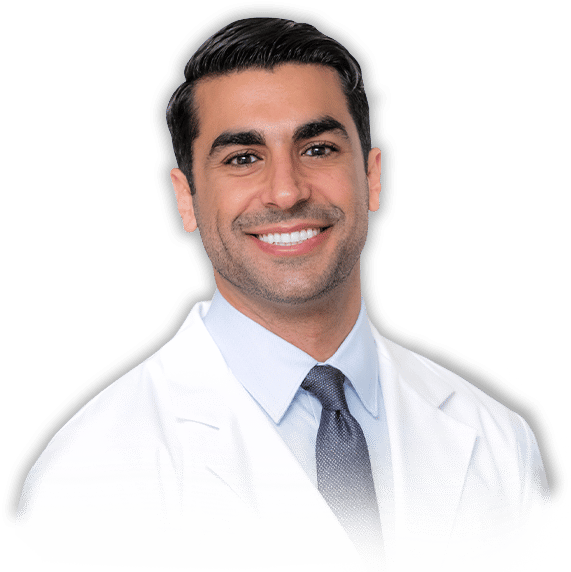
Dr. Justin Houman, MD, FACS is a board-certified urologist and fellowship-trained microsurgeon at Tower Urology, Cedars-Sinai Medical Center in Los Angeles. His subspecialty training in male reproductive medicine and microsurgery is held by fewer than 2% of practicing urologists in the United States.
His clinical focus is narrow by design. Varicoceles, chronic testicular pain, male infertility, vasectomy, testosterone optimization, erectile dysfunction, penile implant surgery, and Peyronie’s disease are not add-on services here. They are the practice. Patients travel from across the country and internationally for procedures, particularly microsurgical varicocelectomy, spermatic cord denervation, and inflatable penile implant surgery, that require a level of subspecialty training and surgical volume most urology practices do not have.
Find Testicular Pain Relief Near Santa Monica
You shouldn’t have to accept testicular pain as something to simply live with — and for most men, you don’t. Dr. Houman offers thorough, mechanism-focused evaluation and advanced microsurgical care for Santa Monica and Westside patients, including those who’ve been told nothing more could be done. Contact the office to schedule a consultation and take the first step toward identifying, and finally treating, the true source of your pain.